

Choose an easy first recipe
Start with a dish you know well enough to recognize when something is missing. It might be a weeknight favorite, a handwritten family recipe, or a trusted recipe you saved online. The best first recipe is not necessarily the most impressive one; it is one you will be glad to find again.
Open the cookbook where the recipe belongs and choose to add a recipe. If you have more than one cookbook, take a moment to confirm the destination before you begin. A recipe can be moved later, but putting it in its natural home makes it easier to return to from the start.
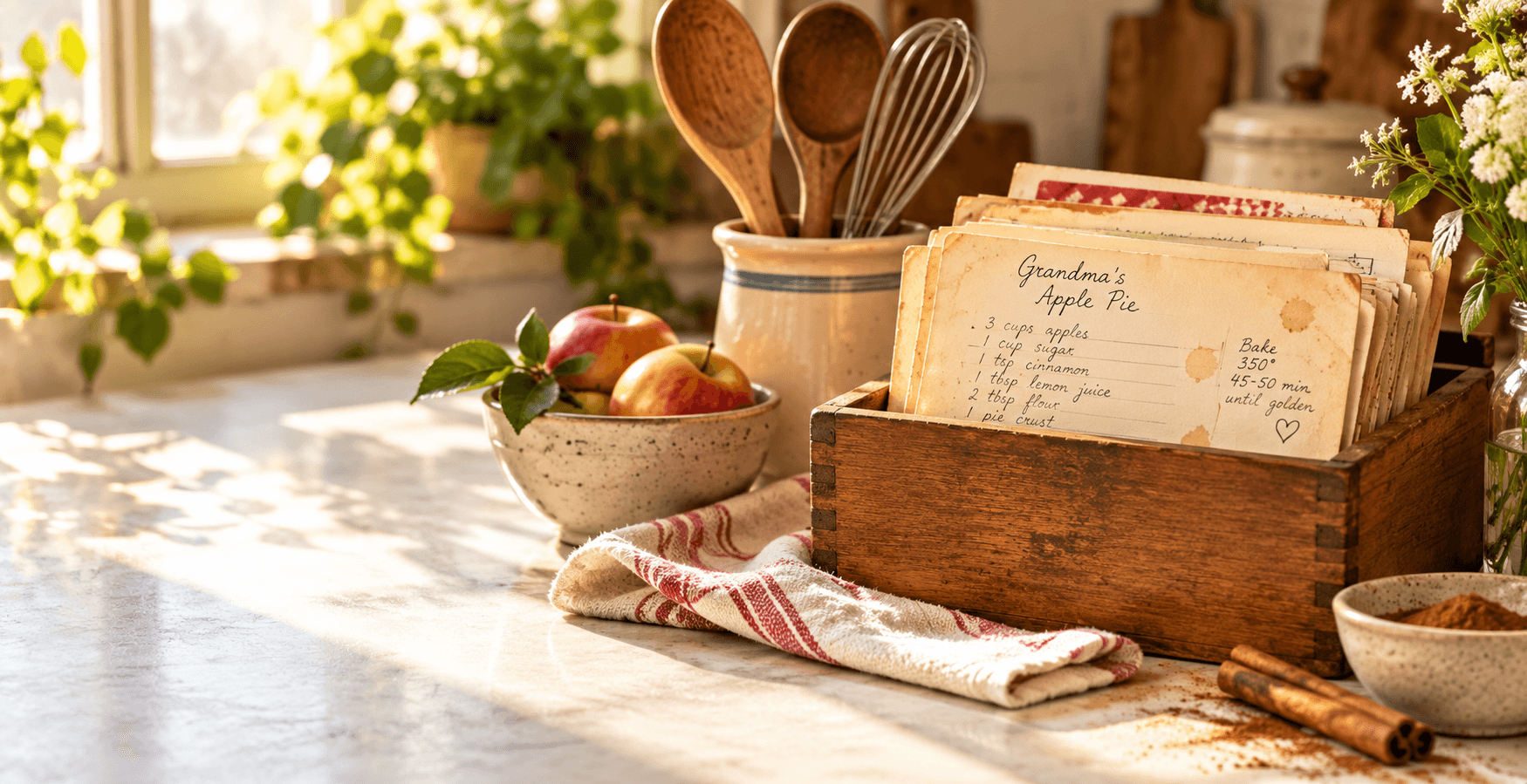
The first version gets the recipe safely into the book. Cooking it is how the recipe becomes truly useful.
Pick the entry method that matches the source
Manual entry works well when you are writing down a recipe from memory or cleaning up a short, reliable source. Add the title, ingredients, directions, and the practical details you know. You can add ingredient rows and instruction steps as you go, so there is no need to force a recipe into one long note.
Copy and paste is useful for recipe text you already have in a note, message, or webpage. Review the parsed result before saving. For recipe cards, clippings, or pages you want to preserve visually, use photo import. Supported recipe files can also be imported when they already contain recipe data. Choose the method that preserves the original with the least retyping, then review every important detail yourself.
Review imported recipes before they become your working version
Importing can save time, but it cannot know whether a handwritten fraction, a stained line, or a family abbreviation was read correctly. Compare titles, quantities, units, temperatures, and steps against the original. Treat an import as a draft, especially when the source is handwritten or photographed in low light.
Keep a helpful photo with the recipe when it shows the finished dish or preserves a meaningful card. If the source came from another cook, cookbook, or website, record the source name or link. A clear source note makes the recipe more trustworthy and helps a future reader understand where it came from.
Make the recipe easy to cook
Use a title that tells you what you are looking at. Grandma's chicken is meaningful, but Grandma's Lemon Chicken with Potatoes is easier to browse and search. Add preparation time, cooking time, servings, a category, and tags when they will help you choose the recipe later; these details can wait if you do not know them yet.
Write ingredients in the order a cook will use them and split directions into clear steps. If the original says bake until done, preserve that wording in a note or story, then add a tested clarification when you have one. It is better to label an uncertainty than to make a confident guess.
Save a useful first version, then return after cooking
Save once the recipe has enough information for someone to attempt it. You do not need a professional photo or a complete family history before it belongs in the book. The first saved version gives you a place to collect the missing details instead of losing them in a separate note.
The next time you cook it, update what you learn: a more accurate timing, the pan size, a substitution that worked, or the story someone remembered. Notes and memories let the recipe keep its history without crowding the instructions. Each revision can make the next cook's experience easier.
A simpler way to keep everything together
Give the recipes you love a real home
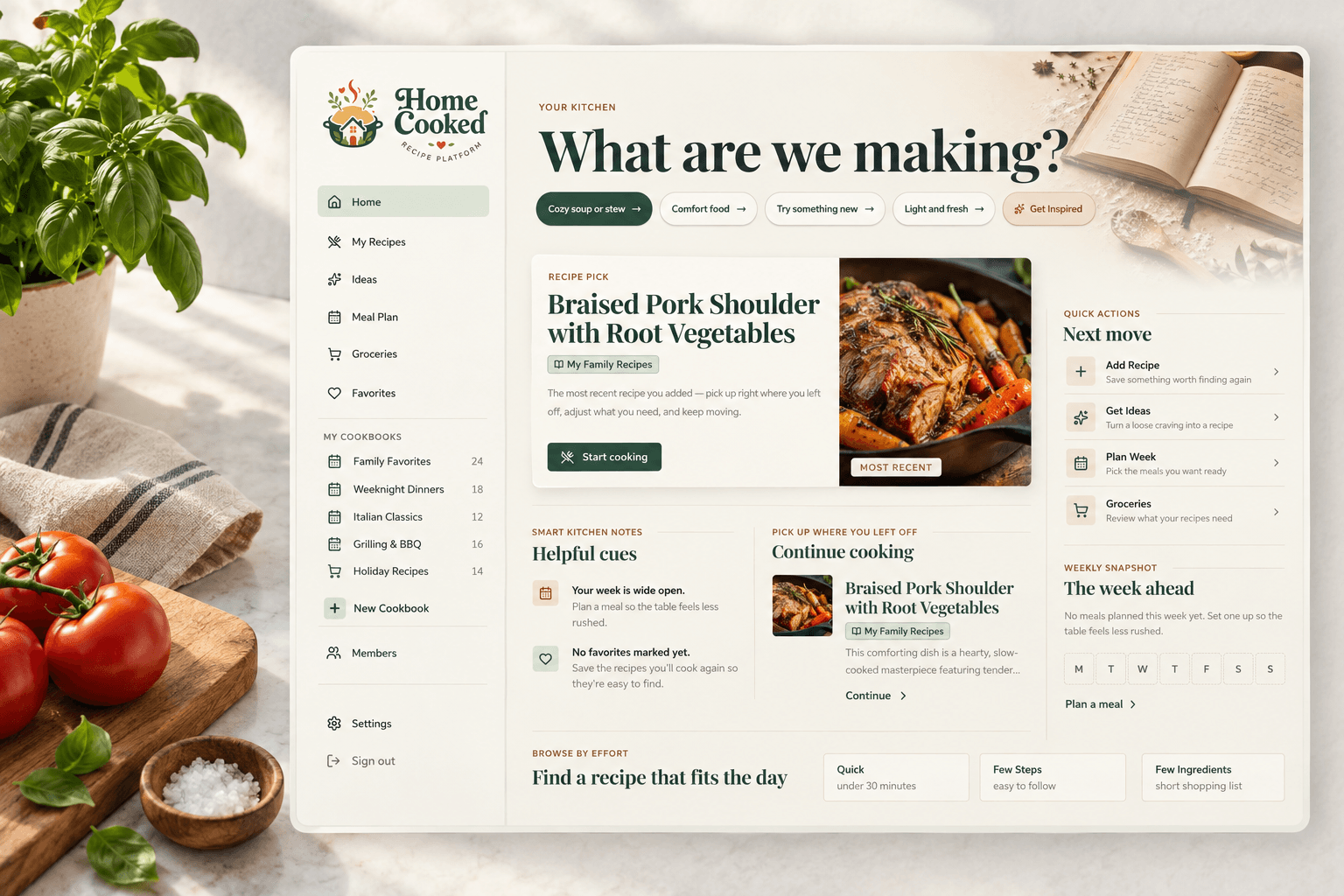
Home Cooked lets you collect recipes into cookbooks, add the notes that make them yours, and share individual recipes or a whole cookbook when the plan and your family’s needs make that a good fit.
Create your cookbook