A collection isn't quite the same as a cookbook
Most people already have a recipe collection. It may be split between browser bookmarks, photos, index cards, saved posts, and a few dishes that never needed written directions. The collection grows whenever something looks good. A cookbook begins when you decide which of those recipes belong together and how you want to return to them.
That distinction is useful because it removes the pressure to organize everything you've ever saved. A personal cookbook can be selective. It can hold the food you make now, the meals you're learning, or the recipes connected to a particular season or household. Its point of view is what makes it feel like a book rather than storage.
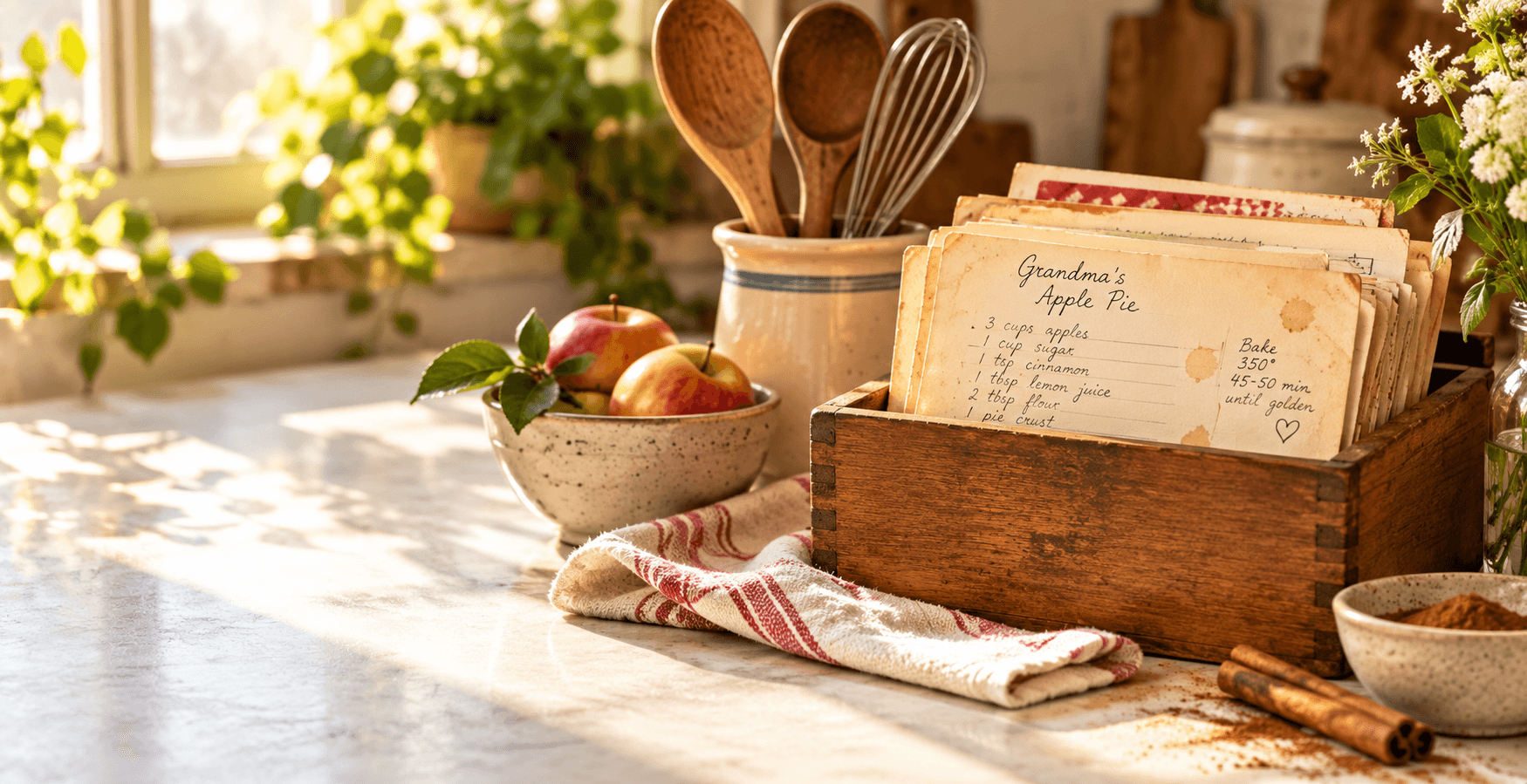
A personal cookbook is shaped as much by what you leave out as by what you keep.
Let the way you cook define the book
Begin by naming the job the cookbook should do. You might want one dependable place for weeknight meals, a baking book that records your adjustments, or a family collection that combines several relatives' recipes. The answer will determine what belongs, which sections are useful, and how much context each recipe needs.
A narrow point of view isn't a permanent limitation. It's a way to make the first version coherent. Recipes that don't fit can stay in a separate list until another cookbook earns its own identity. A recipe you've never made might belong in Ideas, while the soup you cooked three times this winter has already earned a place.
If the boundaries still feel unclear, imagine handing the cookbook to someone else. Could you explain in one sentence what they would find inside? That sentence is a practical editorial test. It can prevent a focused collection from becoming another place where every interesting link goes to disappear.
Bring the scattered pieces into view
Organization is difficult when the recipes remain hidden in separate systems. Create a temporary gathering place and bring in enough information to recognize each item: title, source, format, and a quick note about whether you use it. Don't stop to perfect every recipe during this pass.
You'll probably find clusters before you create categories. Several tomato sauces may be variations of one idea. A group of recipes may all come from the same summer or the same relative. Notice those relationships, but resist building an elaborate structure too soon. The collection should tell you what sections it needs.
This is also the moment to separate reliable recipes from possibilities. A personal cookbook is easier to trust when tested favorites don't compete with fifty things you might make someday. Keep an ideas area for the possibilities, then move a recipe into the cookbook after it has a real place in your cooking.
Use sections that answer an everyday question
Good categories shorten the distance between I need dinner and Here is the recipe. Use words you naturally say, such as Quick Dinners, Baking, Breakfast, Soups, or Holidays. If you regularly think by season, person, or occasion, those can work too. The right structure is the one you can predict without studying it.
Avoid a category for every difference. A dozen sections with one recipe each usually create more searching, not less. Start broad, then split a section when it becomes crowded enough to slow you down. A recipe can carry useful details such as vegetarian or freezer-friendly without requiring a separate cookbook section for each label.
Every recipe should have one obvious home, even if it could fit elsewhere. Put cornbread where you'd look first, not in every category that can make an argument for it. Search and secondary labels can handle the overlap; the main structure should remain calm.
Give every recipe a name you can recognize
Consistent titles make browsing easier and expose duplicates. Decide whether the dish, the person, or the occasion comes first, then use that pattern most of the time. A title such as Aunt June's Corn Pudding keeps the family connection while still telling a new reader what the recipe is.
Duplicates aren't always mistakes. Two cards may record different stages in a recipe's life, or one may contain the adjustments your household actually uses. Choose a working version, then keep the older source as an attachment or note when its history matters. If two recipes are truly the same, remove the extra copy so future edits don't split in different directions.
Use the same restraint with recipe formatting. Familiar units, a stable ingredient order, and clear directions reduce friction. Preserve unusual phrasing in a story or source note when it carries the cook's voice. Organization should make personality easier to notice, not wipe it away.
Maintain the cookbook by cooking from it
A personal cookbook improves at the stove. When you notice that the timing is optimistic or that the sauce needs more salt, add the note while the experience is fresh. Remove a recipe that repeatedly disappoints you. Add a photo when it will help someone recognize the finished dish.
A short review every few months is usually enough. Look for recipes still sitting in the wrong section, titles that are hard to search, and several versions competing for attention. Small corrections keep the structure healthy without turning the cookbook into a permanent administration project.
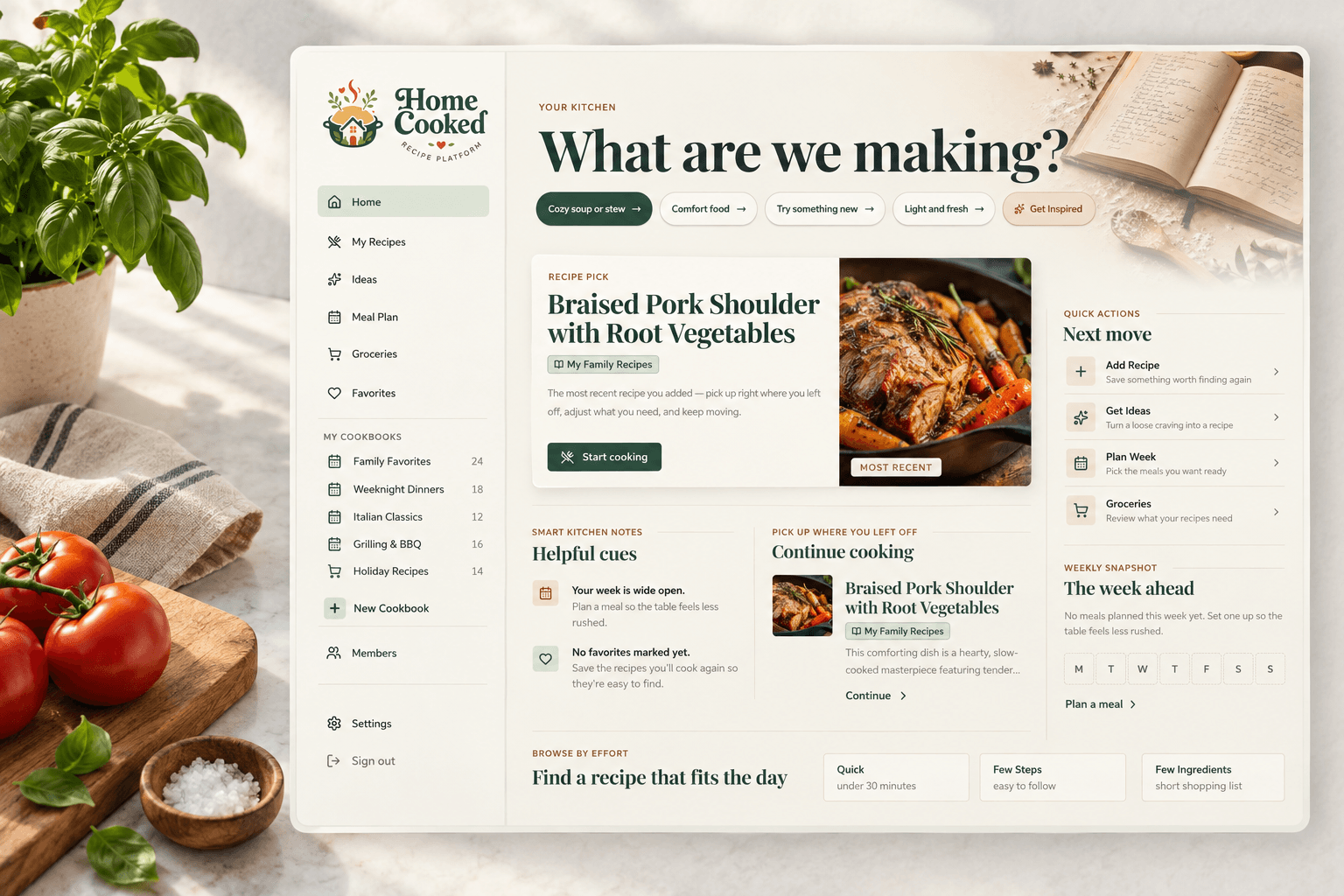
Home Cooked takes a book-first approach, so recipes can belong to intentional cookbooks instead of one undifferentiated feed. Categories, notes, source details, and sharing all support the structure you chose. The value comes from the editorial decision you made first: what this cookbook is for and why these recipes belong together.
A simpler way to keep everything together
Give the recipes you love a real home
Home Cooked lets you collect recipes into cookbooks, add the notes that make them yours, and share individual recipes or a whole cookbook when the plan and your family’s needs make that a good fit.
Create your cookbook