An online pile of recipes isn't yet a recipe book
The internet makes it possible to collect recipes faster than anyone can cook them. Links accumulate, screenshots disappear into the camera roll, and typed family recipes sit beside saved ideas with no clear relationship. Putting those items online solves the storage problem, but not the question of what kind of book they make together.
A recipe book has a point of view. It contains choices about what belongs, how a reader moves through the collection, and which details deserve to stay with each dish. Building one online gives you room to revise those choices without losing the feeling of a coherent book.
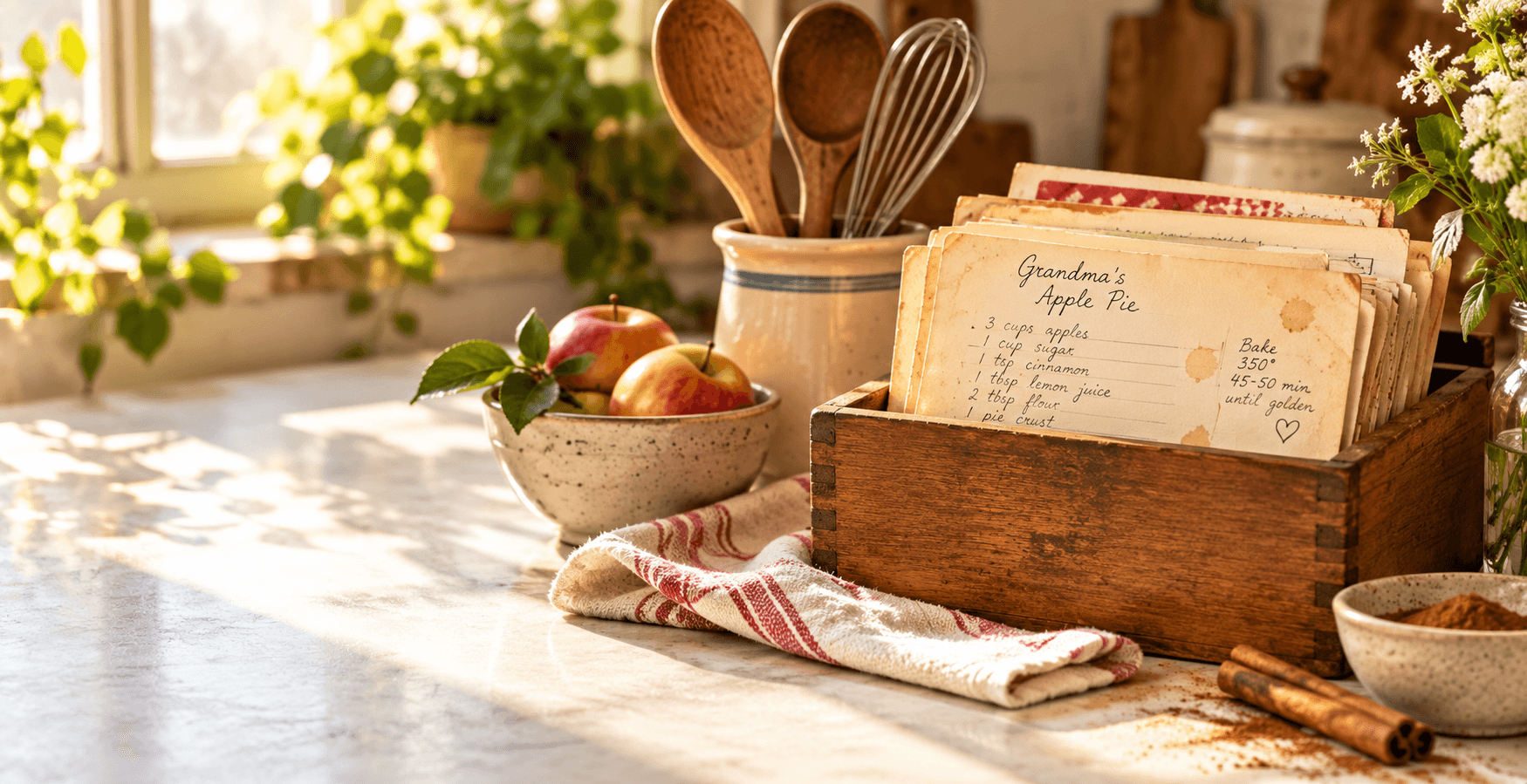
The format may be online, but the book still needs a point of view.
Begin with the book you want to open
Imagine the moment when you'll use the recipe book. You may be planning dinner, baking through family favorites, collecting food for a new household, or recording your own most reliable dishes. That moment should guide the first group of recipes.
Give the book a working title and a short description. These don't need to be clever. Weeknight Food We Trust gives you a clearer editorial boundary than My Recipes. A focused beginning makes it easier to choose sections and easier to notice when an interesting recipe belongs somewhere else.
Start with recipes you know or have a strong reason to keep. A small book that reflects your real cooking will teach you what the structure needs. You can add ambitious projects later without allowing them to bury the meals that brought you there.
Select recipes that can live well together
Gather from every relevant source, including cards, documents, websites, messages, and your own notes. Preserve attribution as you go. Then look across the group for repetition, gaps, and natural relationships before deciding on the final shape.
A recipe deserves a place when it supports the purpose of the book. Tested favorites can sit in the main collection; possibilities can wait in an ideas list. When several versions compete, choose the one you use and keep meaningful alternatives as notes rather than forcing the reader to compare them every time.
Don't worry about reaching a certain number. A recipe book feels complete when it gives the reader a satisfying set of choices, not when it crosses an arbitrary total. Ten excellent baking recipes can form a stronger book than sixty unrelated saves.
Create a table of contents for real life
Online tools make it tempting to create endless tags, but the main sections should remain easy to scan. Choose categories based on how you decide what to cook: Quick Dinners, Slow Weekends, Baking, Breakfast, or Celebrations. A section earns its place when it helps several recipes become easier to find.
Name recipes consistently and descriptively. Keep a family nickname when it matters, then add the words a new reader might search. A title such as Green Cake may be beloved, but Green Cake with Pistachio and Citrus gives the online book more useful information without discarding the familiar name.
Use secondary details for overlap. A vegetarian soup can live in Soups while a label records that it's meatless. The table of contents stays calm, and search can still surface the qualities that matter in a particular moment.
Give every recipe a familiar shape
Consistency reduces the effort of cooking from a screen. Put ingredients in the order they are used, divide long recipes into sensible groups, and write steps that can be followed with messy hands and divided attention. Include servings, timing, and source information when known.
Uniform structure doesn't require uniform voice. Keep the note about who taught you the dish, the photograph from the first attempt, and the phrase everyone in the family uses. Practical formatting creates space for those details because the reader no longer has to struggle with the basics.
Online recipes can be corrected as you learn. Add the pan size you forgot, revise the timing after a new oven, or record the substitution that became permanent. Keep important changes visible so the book reflects experience rather than quietly rewriting it.
Treat editability as part of the cookbook
A living recipe book is allowed to change without losing its identity. Review it while cooking, not only while organizing. Remove recipes that never work, promote ideas that become favorites, and add the story that someone finally remembered over dinner.
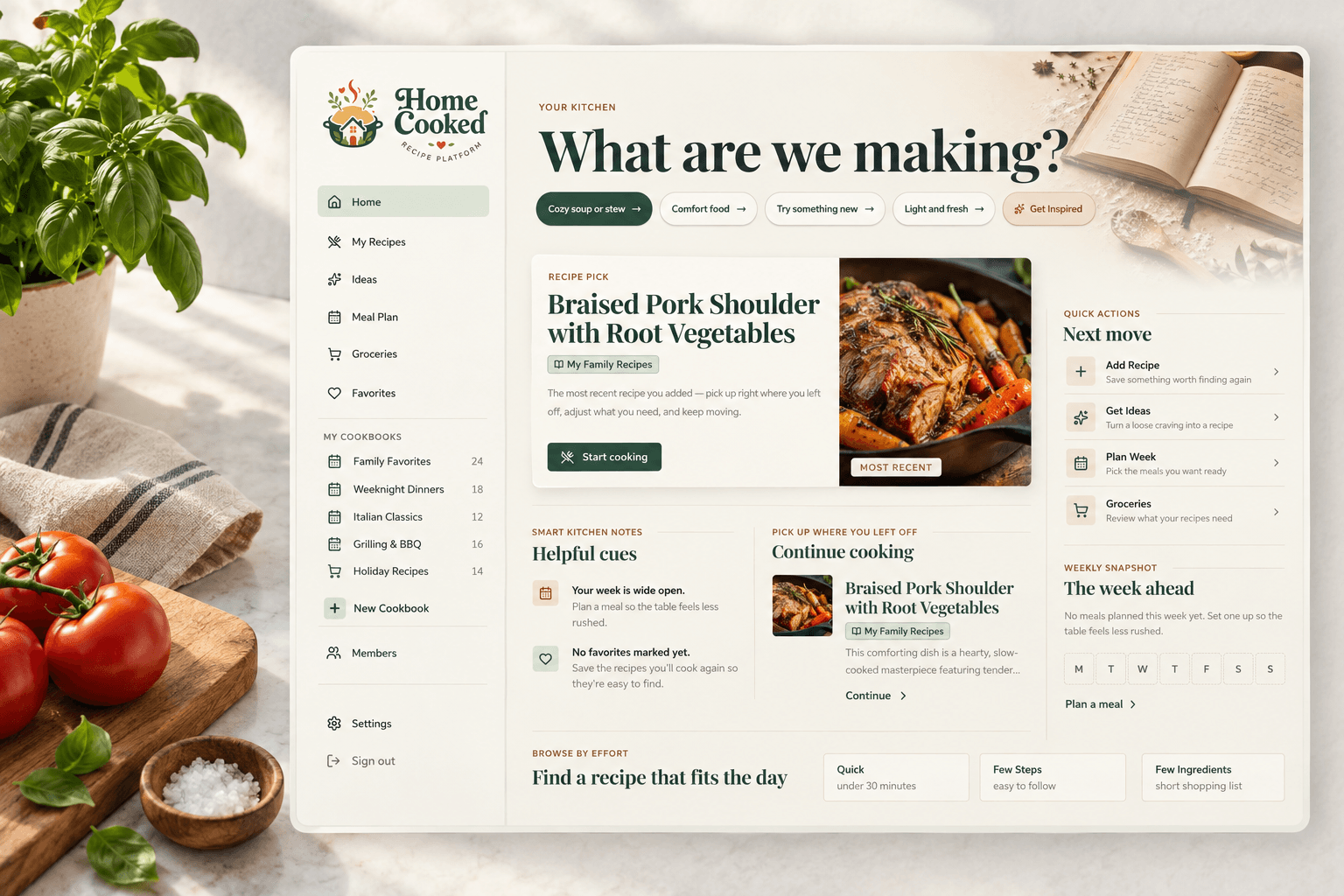
Home Cooked is built around this book-first idea. You can create distinct cookbooks, organize recipes within them, add notes and images, and share a recipe or invite family into a cookbook when appropriate. The result can feel like an intentional book while retaining the flexibility of an online collection.
The best online recipe book becomes easier to recognize over time. Its sections reflect how you cook, its recipes carry the details you need, and its history remains visible in notes and sources. Technology keeps the pages editable; your choices are what make them a book.
A simpler way to keep everything together
Give the recipes you love a real home
Home Cooked lets you collect recipes into cookbooks, add the notes that make them yours, and share individual recipes or a whole cookbook when the plan and your family’s needs make that a good fit.
Create your cookbook