Sometimes the handwriting is what you recognize first
Maybe the recipe is only six lines long. There's a butter stain in one corner, a measurement crossed out twice, and a note in the margin that becomes smaller as it runs out of room. Before reading the title, you know whose handwriting it is. The card feels familiar because it spent years in a kitchen you remember.
The phrase Grandma's handwritten recipes is familiar, but these objects may come from a grandfather, parent, aunt, neighbor, friend, or anyone whose food became part of your life. Preserving them means caring for two things at once: the physical evidence of that person and the practical knowledge needed to make the dish again.
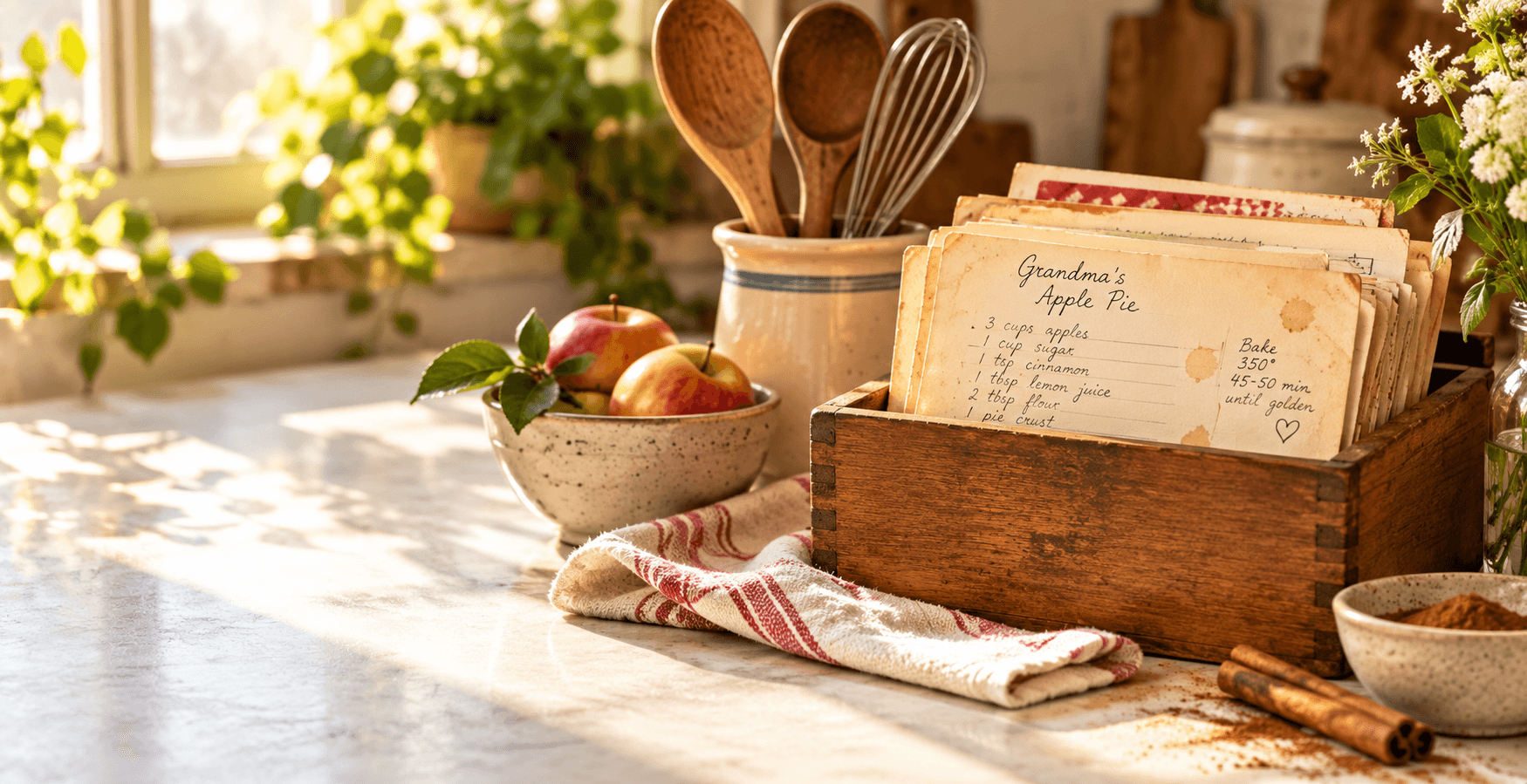
The card keeps the handwriting. The cookbook keeps the recipe in motion.
Give the original a safe place to rest
Move fragile recipes away from heat, moisture, direct sunlight, and kitchen grease. Handle them with clean, dry hands on a clear surface. Don't tape a tear, erase a mark, or press a brittle fold flat. Conservation should stabilize the object rather than make it look new.
Use an acid-free sleeve, folder, or box sized so the card doesn't bend. Keep related pages and envelopes together without forcing them into contact with adhesive. If a document is badly damaged or unusually valuable, a local archivist or conservator can advise you before an attempted repair causes more harm.
Write identifying information in a separate record rather than on the card. A simple reference number can connect the physical object to its photographs, transcription, and story. This becomes especially useful when several cards share the same title or handwriting.
Photograph the card before trying to interpret it
Place the recipe on a plain surface in soft, even light. Keep the camera directly above it, include every edge, and check the focus on the smallest writing. Photograph the back and any insert, even if it seems blank at first. Faint pencil and old impressions can hide until the image is enlarged.
Take an overall image before close details. If the ink is faded, make a second copy with careful contrast adjustments while preserving the untouched original file. Don't crop away stains, torn edges, crossed-out lines, or notes simply because they aren't part of the formal instructions.
Use filenames that connect the image to a person and recipe when known. Back up the files in more than one place and share a copy with another trusted family member. A digital image is only safer than the card when people can still locate and open it.
Transcribe with patience and a little humility
Begin by typing exactly what you can read. Keep original spelling, abbreviations, and punctuation in the source transcription. Use brackets or a note for uncertain words. The temptation to fix the recipe while copying it can make it impossible to know later what the writer actually said.
Old instructions often assume a shared kitchen vocabulary. A moderate oven, one package, or bake until done may once have been perfectly clear. Keep that wording, then add modern guidance separately when it can be verified through packaging history, another family copy, or a careful test.
Handwriting recognition software can help with typed clippings, but it shouldn't be trusted with family script, fractions, or stained paper without review. Compare every quantity and temperature with the image. One confident transcription error can change both the recipe and the record.
Preserve the quirks without making a new cook guess
The unusual parts often carry the most personality. A crossed-out ingredient shows revision. A repeated underline may reveal what the cook considered important. A phrase such as just enough milk records judgment that was learned by sight and touch rather than a measuring cup.
Keep those elements in the image and source note, then build a clear working recipe beside them. Ingredients can be reordered for use, missing steps can be labeled as questions, and tested guidance can describe texture or timing. The practical version should help someone cook without pretending the original was more precise than it was.
If family members disagree about a detail, preserve the disagreement. One person may remember walnuts while another insists the cake never had them. Label variations by contributor or occasion. A recipe with a visible history is more trustworthy than a seamless version created by hiding uncertainty.
Write down the person before the story thins out
Record the writer's full name, their relationship to the family, and who used the card. Ask where the recipe came from and when it usually appeared. A few concrete details, such as the blue bowl used for mixing or the neighbor who first brought the dish, can locate the recipe in a life without turning the note into a grand tribute.
Include published sources when known. Many handwritten cards were copied from newspapers, food packages, community collections, or friends. Attribution doesn't make a recipe less personal. It shows how the recipe entered the household and what happened to it there.
Invite others to look at the card. The handwriting, paper, or phrasing may prompt recognition that the recipe title alone didn't. Record those memories with names and dates so future readers can distinguish recollection from fact.
Let the recipe leave the box without replacing the card
Organize the typed recipe, original images, attribution, and notes in a collection people can browse. Use a searchable title while retaining the familiar family name. Place the recipe in the section where someone is most likely to look for it, and keep backups of the original files outside the working cookbook.
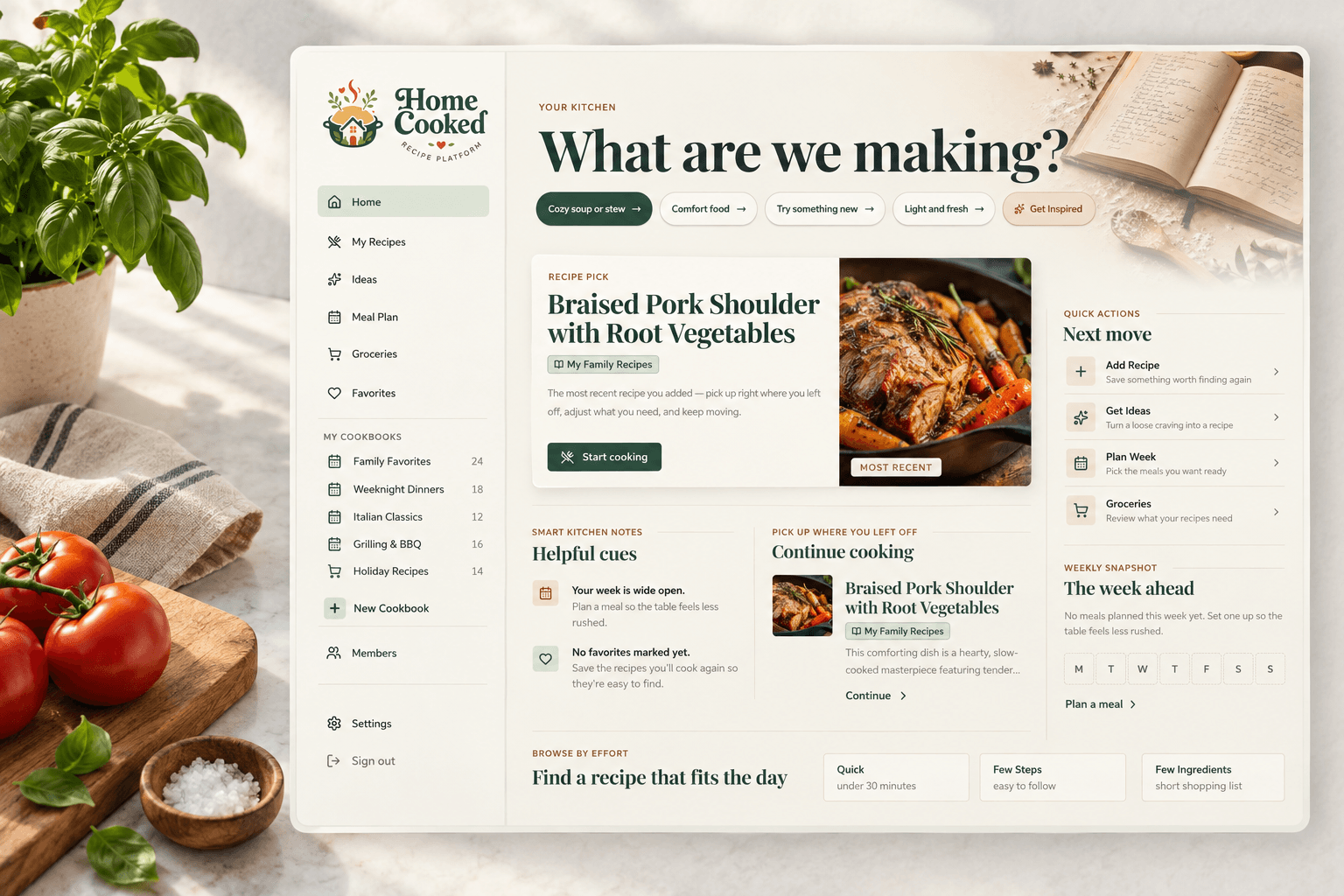
Home Cooked can bring the practical recipe and its private source attachments together, then make the recipe or cookbook available to family when you choose. A relative can cook from the clear version while still seeing the handwriting that gave it context.
Digitizing a handwritten recipe isn't a way to retire the original or declare the work complete. It's a way to let the knowledge travel while the card remains safely cared for. The recipe has been preserved when someone can read it, understand where it came from, and put it back on the table.
A simpler way to keep everything together
Give the recipes you love a real home
Home Cooked lets you collect recipes into cookbooks, add the notes that make them yours, and share individual recipes or a whole cookbook when the plan and your family’s needs make that a good fit.
Create your cookbook