A family cookbook begins before it looks like one
A family cookbook rarely begins with a tidy table of contents. It begins with a recipe card pushed to the back of a drawer, a screenshot someone meant to sort, or a dish one relative makes from memory. Another recipe may be folded inside an old cookbook, while the version everyone actually uses lives in a text thread. None of these pieces looks like a collection on its own.
Bring them together and a pattern starts to appear. There are the meals that show up every week, the cake requested for every birthday, and the dishes that belong to a particular person or season. Creating a digital family cookbook is the work of noticing that pattern, then giving it a home without polishing away the details that made the recipes worth keeping.
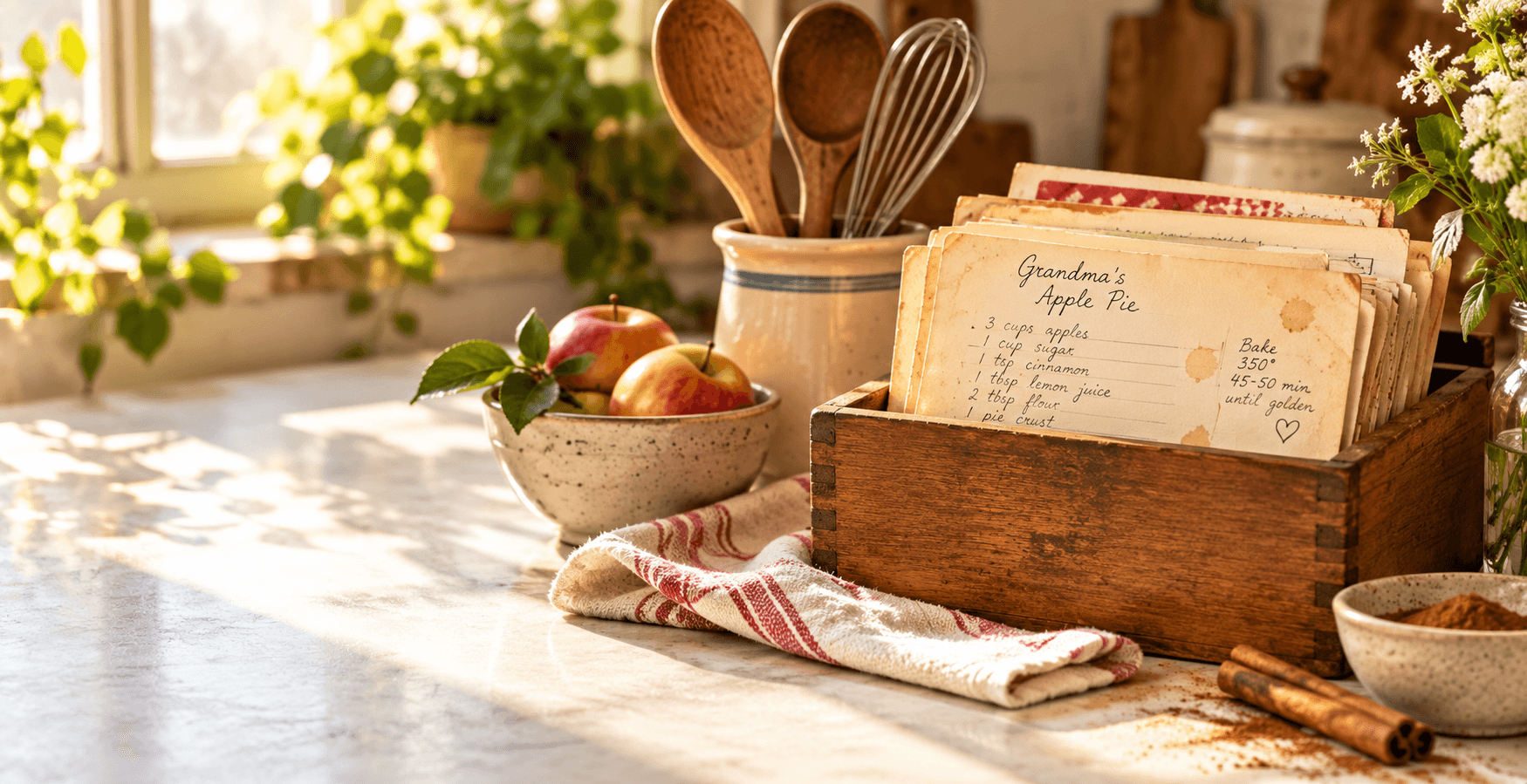
A family cookbook becomes meaningful when the recipes return to the table.
Give the collection a reason to exist
Before collecting everything, decide what this cookbook is meant to hold. It might be the dependable food your household cooks now, the recipes from one side of the family, or a starter collection for someone moving into a kitchen of their own. A clear purpose gives you a way to say yes to the recipes that belong and not yet to the ones that can wait.
The purpose doesn't need to sound important. A book called The Dinners We Actually Make may become more useful than an ambitious family archive. A collection centered on one grandparent may naturally include a holiday menu, a favorite sandwich, and the cookies that were always waiting in a tin. The shape should come from the life around the food.
Think about the person who will open the cookbook on a busy evening. What will they hope to find? What would they be disappointed to lose? Those questions are more helpful than trying to decide how many recipes a proper cookbook should contain.
Start with the recipes that already have a history
The first gathering pass should be generous and uncomplicated. Ask relatives to send what they already have in whatever form is easiest. A clear phone photo is better than waiting months for someone to type a card. A link, PDF, voice note, or rough list of ingredients can all enter the same temporary inbox while you work out what each item needs.
Recipes often hide in places that don't feel like archives. Check the notes app where someone copied a sauce, the bookmarks folder named Recipes, the email with a subject line like Mom's rolls, and the notebook that also contains grocery totals and phone numbers. The goal at this stage isn't to edit. It's to make the scattered pieces visible.
- Handwritten cards, notebooks, and loose clippings
- Screenshots, bookmarked websites, saved posts, and PDFs
- Email threads, text messages, and shared family folders
- Recipes a relative still makes from memory
Ask for the details no recipe file can hold
A list of ingredients can tell you how to make a dish, but it can't always tell you why the dish stayed. When someone contributes a recipe, ask who taught it to them, when they tend to make it, and whether their version differs from the one they received. A sentence or two is usually enough to keep a recipe connected to a person and a place.
Specific questions are easier to answer than a request for the whole story. Ask what pan they use, what the dough should feel like, or what always appears beside the dish on the table. Someone may remember that the original recipe called for margarine, that an uncle doubled the pepper, or that the pie was served cold the next morning. These small facts make the directions more useful and the cookbook more recognizable.
Record attribution even when the history is incomplete. From Aunt Lena, adapted over the years is more honest and more meaningful than leaving the source blank. If a recipe came from a published creator or website, keep the creator name and source link with it rather than presenting the work as a family original.
Make the recipes readable without erasing their personality
Family recipes are often written for cooks who already know what happens next. A card may say bake until done, add enough flour, or use the usual pan. Those phrases belong to the recipe's history, but a new cook may need more help. Keep the original wording in a note or image, then add a clearly labeled clarification when you can verify one.
Consistency helps readers trust the collection. Choose a familiar order for ingredients, write temperatures and measurements the same way, and break long methods into readable stages. If one recipe calls the same ingredient by three names, pick a clear term for the working version. These edits should make the recipe easier to cook, not make every contributor sound like the same person.
When something is uncertain, say so. Needs testing, small can in the original, or timing added after a family test are useful editorial notes. Guessing silently creates a polished recipe that may no longer be true. A good digital cookbook can hold both the evidence and the practical version side by side.
Shape the cookbook around real meals
Sections should help someone decide what to cook. Begin with broad names people already use, such as Weeknight Dinners, Baking, Holidays, Breakfast, and Family Favorites. Add a narrower section only when several recipes genuinely belong together. Too many categories turn browsing into a filing exercise.
Recipe titles need the same balance of clarity and character. Grandma's Chicken may be meaningful to the family, but Grandma's Lemon Chicken with Potatoes will be easier to find later. Keep affectionate names, then add enough description to make search and browsing work. Consistent naming also makes duplicate versions easier to notice.
Look at the cookbook as a whole before calling it finished. Is there a long stretch of desserts but no main dish anyone cooks? Are three versions of the same casserole competing for attention? Keep the version people use, attach the earlier one when its history matters, and leave room for the collection to reflect ordinary meals as well as celebrations.
Let the cookbook stay a little unfinished
The most useful family cookbook isn't frozen on the day it's assembled. Recipes change when someone discovers the right pan size, takes a helpful photo, or writes down the timing that used to live only in memory. Invite those corrections and additions. They are signs that the collection is being cooked from rather than merely admired.
Sharing can happen gradually. Start with the people who contributed recipes or are most likely to use them. Ask them to check names, ingredients, and family details. Their corrections may reveal another version or another story, which is easier to handle when the cookbook is understood as a living collection.
Home Cooked is organized around cookbooks rather than a single endless recipe feed. It gives recipes, notes, photos, and source details one place to live, then lets you share an individual recipe or invite family into a cookbook when that suits the collection. The technology should stay in the background. The real measure of success is whether someone can find the dish they remember and cook it again.
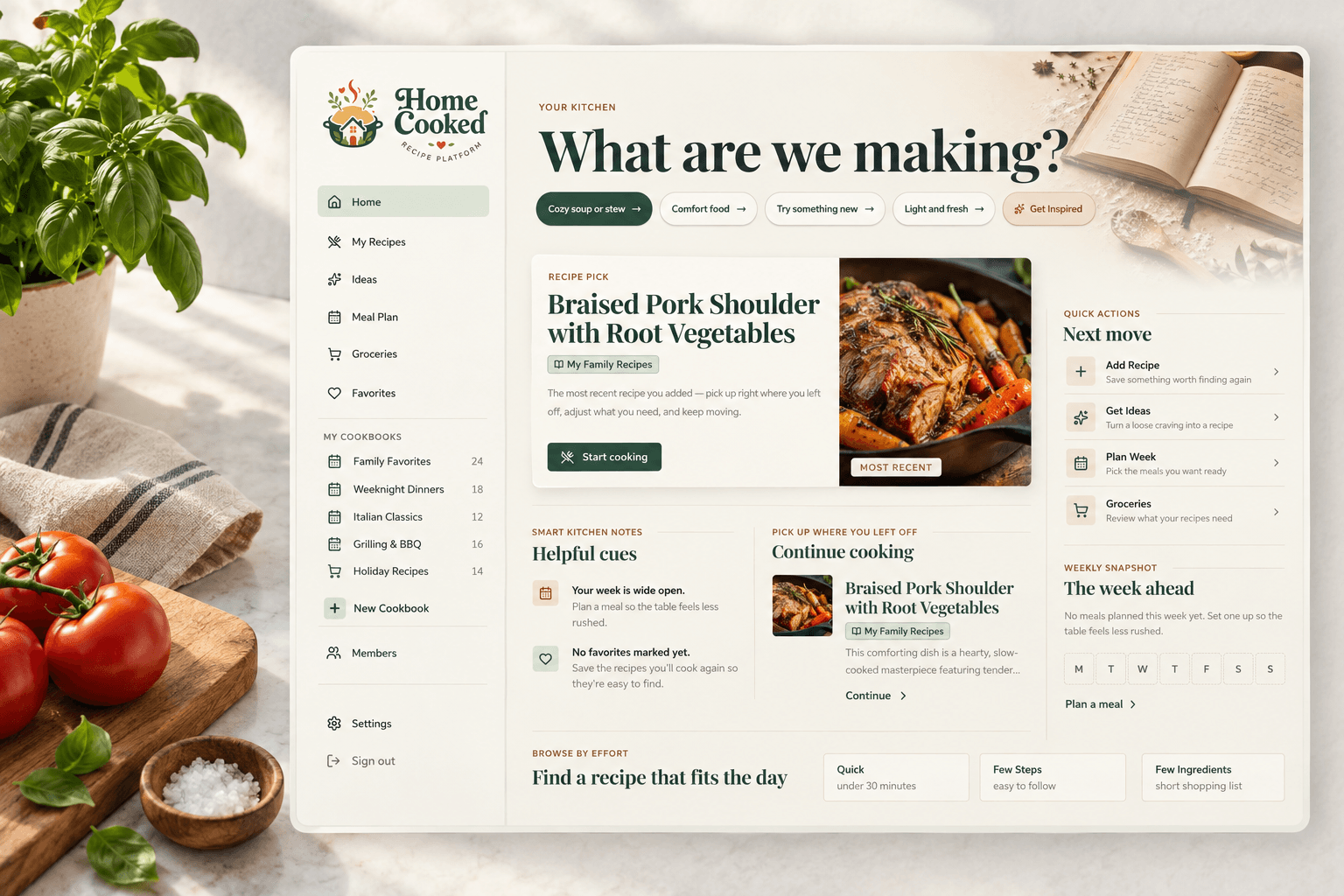
A simpler way to keep everything together
Give the recipes you love a real home
Home Cooked lets you collect recipes into cookbooks, add the notes that make them yours, and share individual recipes or a whole cookbook when the plan and your family’s needs make that a good fit.
Create your cookbook