The gift is in the context, not the recipe count
A family cookbook becomes a gift when it feels unmistakably meant for someone. The recipes matter, but so do the names beside them, the photograph of a familiar table, and the note explaining why a simple cake appeared at every birthday. Twenty well-chosen recipes can feel more generous than a hundred gathered without a point of view.
Begin with the recipient rather than the archive. Think about what they cook now, what part of family life they miss, and which dishes they may want to carry into a new home or new stage of life. The collection should be useful enough to open on a Tuesday and personal enough to feel different from any other cookbook.
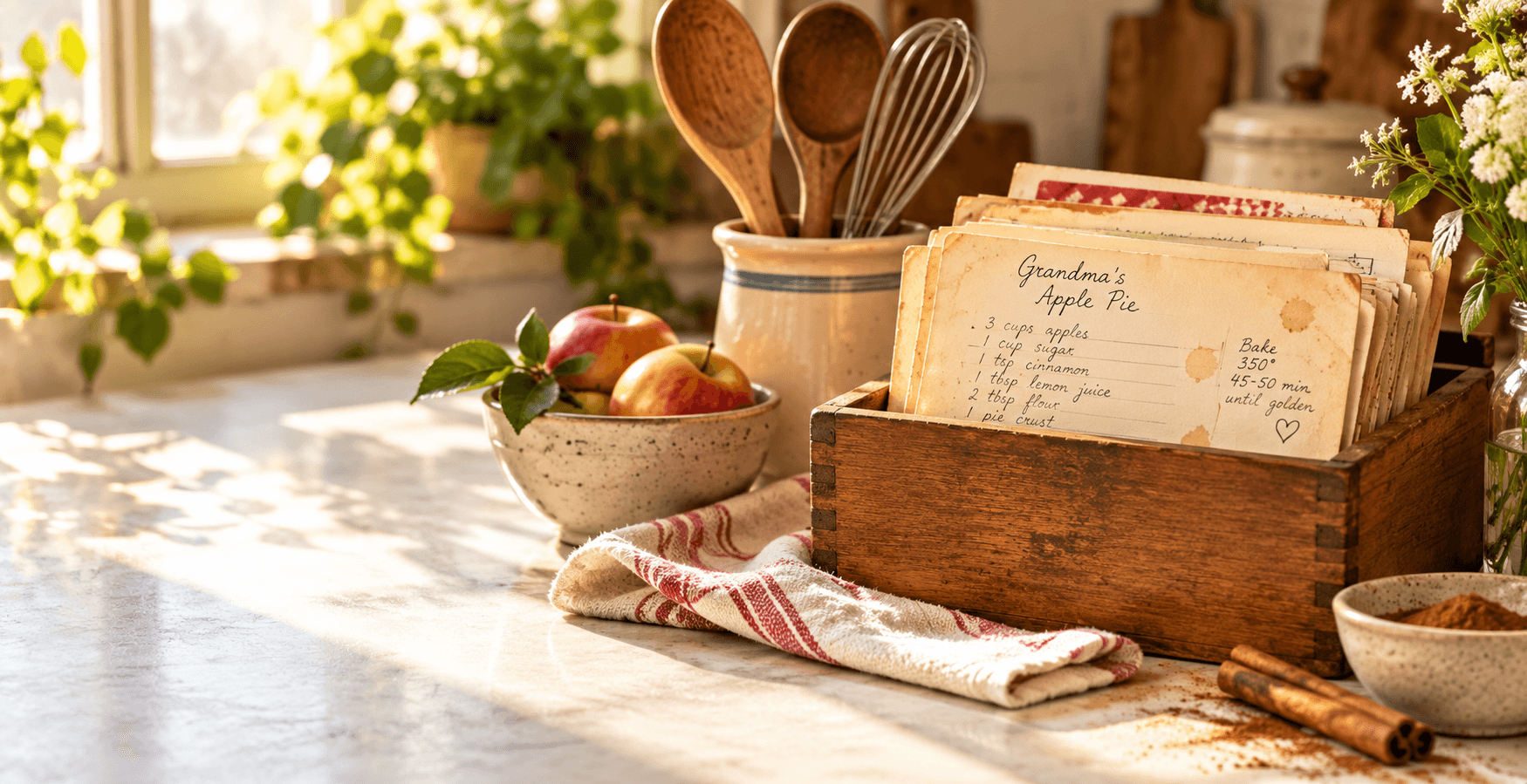
The most personal cookbook gift leaves room for the recipient's own kitchen.
Choose an occasion and a gentle theme
The occasion can suggest the shape of the book. A graduation gift might collect the meals someone grew up eating. A new parent may appreciate the family's easiest dinners. An anniversary collection might follow celebrations across the years. The theme doesn't need to appear in every title, but it should guide what belongs.
Keep the idea narrow enough to finish. The recipes from Dad's Sunday table is clearer than everything our family has ever cooked. A focused theme makes omissions feel intentional, and it helps relatives understand what kind of contribution to send.
Write a one-sentence promise for the cookbook. This book gathers the food that made our summer visits feel like home is specific enough to guide recipe choices, photographs, and the opening note. If an item doesn't support that promise, save it for another collection.
Invite relatives to contribute without assigning homework
Ask each person for one recipe and one memory. A small request is more likely to be answered than an open call for stories. Offer examples: the breakfast Grandpa made, the dip that always disappeared first, or the dish you learned after moving away.
Let people respond in the form they already have. A photo of a card, a voice note, a copied email, or a link can all be useful. Follow up with specific questions about unclear amounts, names, or occasions. Those short conversations often supply the detail that makes the gift feel alive.
Keep track of attribution as contributions arrive. Record who sent the recipe, whose version it is, and any published source. If two relatives contribute variations, present them honestly or choose a working version with a note about the other.
Edit for the person who will cook from it
A cherished recipe can still be difficult to follow. Read every entry as though the recipient has never watched it being made. Add pan sizes, temperatures, yields, and cues for doneness when they can be verified. Separate ingredients into useful groups and put them in the order they appear in the method.
Preserve personality in the right place. Keep the phrase stir until it looks right, then add a tested description without deleting the original voice. A story note can hold the joke, nickname, or family shorthand while the directions remain clear enough for a first attempt.
Photographs should contribute recognition or context. A useful image might show the finished dish, the handwritten source, the cook who made it, or the table where it usually appeared. A few meaningful photographs are better than decoration added simply to fill space.
Arrange an inviting path through the collection
Open with a short note that explains why these recipes were chosen. Then use sections that fit the theme, such as Sunday Suppers, Birthday Baking, Food for the Freezer, or Recipes Everyone Asked For. A handful of dependable dishes near the beginning gives the recipient an easy place to enter.
Vary the rhythm. A longer story can sit beside a recipe that needs only one sentence of context. Leave room for an ordinary favorite that may not look impressive but carries a clear memory. The book should feel edited, not mechanically filled.
Read the collection from beginning to end before sharing it. Check spelling of names, confirm private stories are appropriate to include, and ask another relative to test the directions that concern you. Careful editing is part of the gift because it shows respect for both the recipient and the contributors.
Let the gift keep growing after the occasion
A digital family cookbook can continue after the day it's given. The recipient can add a photograph after making a recipe, record a substitution that worked, or contribute the dish that becomes part of their own household. That ongoing use gives the collection a life beyond the occasion.
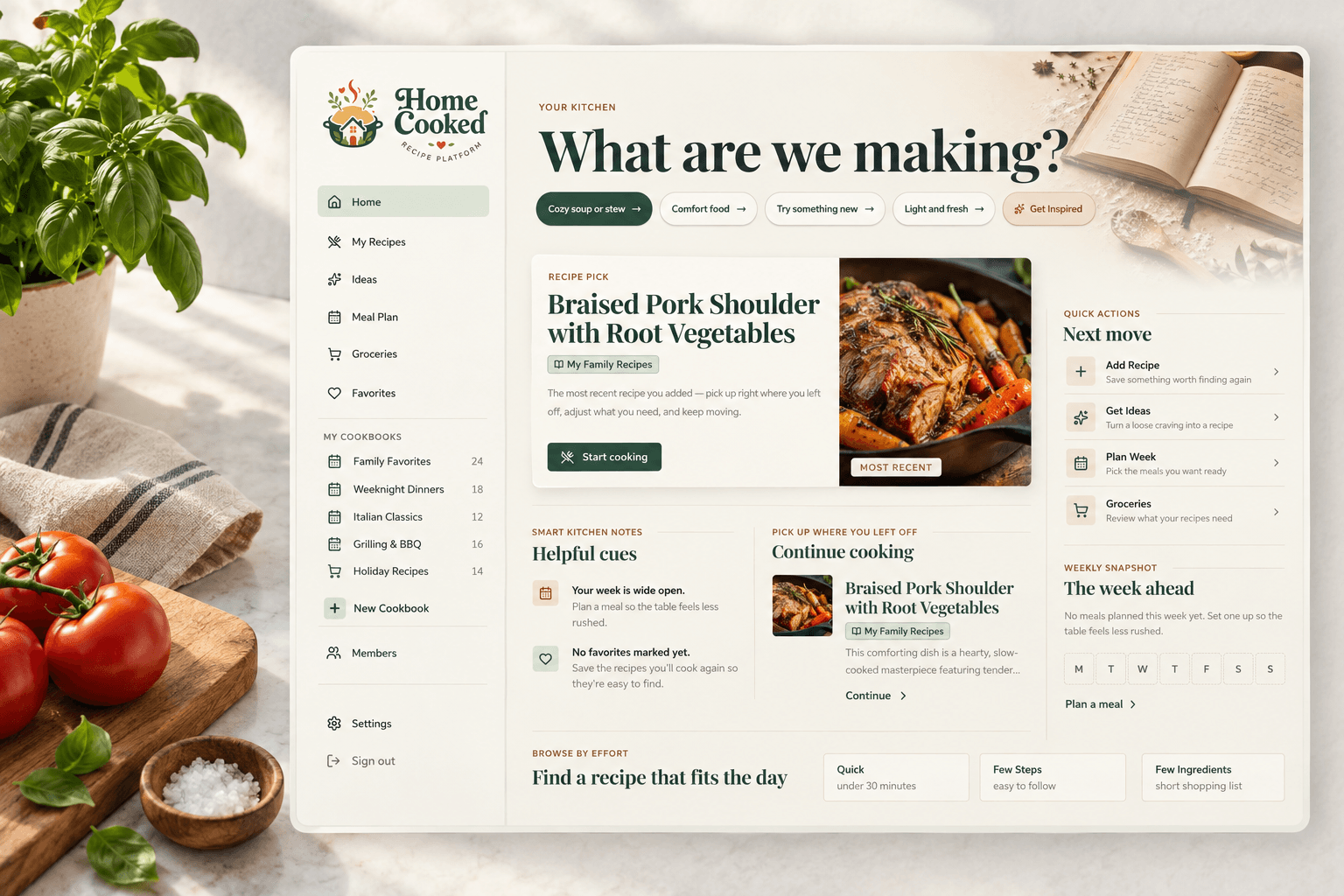
Home Cooked lets you create a cookbook, gather recipes and notes in one place, and share it with up to 3 Family members on Free. Plus adds unlimited sharing and Contributor access. You can also share an individual recipe when that is all someone needs. The platform is most useful when it supports the relationships already present in the gift rather than turning the collection into an advertisement.
End with an invitation, not a claim that the book is complete. Ask the recipient to cook from it, question it, and add what comes next. A family gift becomes more meaningful when it makes room for the person receiving it to become part of the story.
A simpler way to keep everything together
Give the recipes you love a real home
Home Cooked lets you collect recipes into cookbooks, add the notes that make them yours, and share individual recipes or a whole cookbook when the plan and your family’s needs make that a good fit.
Create your cookbook