Digitizing is more than making pictures of paper
A folder of scans can preserve the appearance of a recipe collection while leaving its contents almost as difficult to use as before. The files may have names such as IMG_4382, the backs of cards may be missing, and nobody knows whether the blurry page belongs to the cookie recipe beside it. The paper has been copied, but the collection hasn't been translated into something people can navigate.
A useful digitization project has two parts. It captures the original materials faithfully, and it creates enough structure for someone to find, understand, and cook from them. The work is slower than pressing a scan button, but it prevents a physical mystery from becoming a digital one.
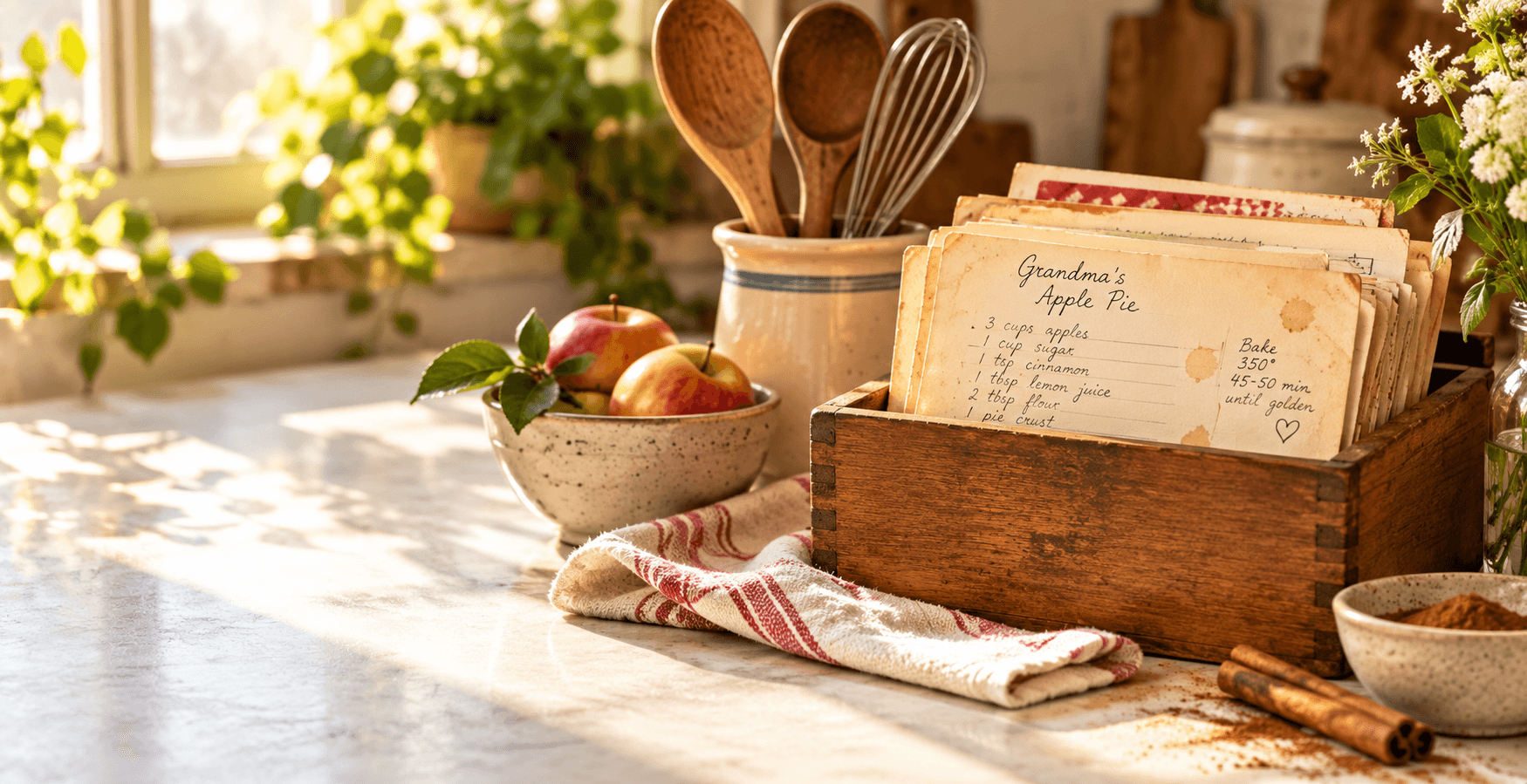
The archive protects the source. The cookbook makes the source useful.
Take inventory before choosing a workflow
Look at the formats, locations, and condition of the collection. Count boxes loosely rather than card by card. Note notebooks, clippings, folders, computer files, and recipes that still live only in someone's memory. Fragile pages and unusual sizes may need a different setup from modern index cards.
Create a tracking sheet with a reference number, recipe name if known, source or person, physical location, and status. The status might be not captured, photographed, transcribed, needs review, or complete. Keep the system simple enough to update while working.
Choose a first batch that is meaningful and manageable. Ten recipes from one notebook can teach you more about lighting, filenames, and transcription than an ambitious attempt to process every box at once. Use what you learn to improve the workflow before the collection grows.
Create clear, consistent digital originals
For photographs, use indirect daylight or two even light sources and keep the camera parallel to the page. Include the full object and a small border around it. For scans, choose enough resolution to read faint handwriting and small type. Review the first few files on a larger screen before continuing.
Capture fronts, backs, inserts, envelopes, and neighboring pages when the relationship matters. If a notebook recipe continues without a heading, include the page before it for context. Don't rely on memory to reconnect loose parts later.
Preserve an untouched master file. Cropped, brightened, or compressed copies can be useful for everyday viewing, but they shouldn't replace the best original capture. Use a consistent filename that includes the tracking number and a recognizable recipe or contributor name.
- Capture the whole object before taking detail images
- Check focus and legibility at full size
- Keep front, back, and related inserts together
- Save an untouched master before editing a copy
Transcribe the recipes people want to cook
Not every captured item needs immediate transcription. Prioritize the recipes family members request, the cards that are hardest to read, and the dishes most likely to be cooked. A searchable title and short description can make the remaining images discoverable while detailed transcription continues over time.
Type what the source says before normalizing it. Preserve original language in a source note, then create a working ingredient list and method. Flag unreadable words and missing facts. If you verify a pan size or timing through testing, identify that information as a later addition.
Use text recognition as a starting point only. Decorative type, faded ink, fractions, and handwriting can produce confident errors. Compare every imported line with the image, especially quantities, temperatures, and words that could change the result.
Name files so the relationships survive
A good filename is helpful, but metadata carries the richer connections. Record the recipe title, contributor, original source, approximate date when known, and any family occasion. Link the transcription to the master images through the same reference number.
Keep a record of uncertainty. Unknown writer, date estimated from notebook, or second page may be missing are valuable facts. They prevent a future reader from treating a guess as history and give relatives a clear question they may be able to answer.
Organize working recipes into broad cookbook sections rather than copying the exact order of a storage box unless that order has meaning. The physical archive and the usable cookbook can have different structures as long as the connection between them remains clear.
Back up the archive, then invite people to use it
Keep more than one copy of the master files, with at least one in a different service or physical location. Check that backups complete and files open. Give another trusted person enough information to find the archive without relying on your device or account alone.
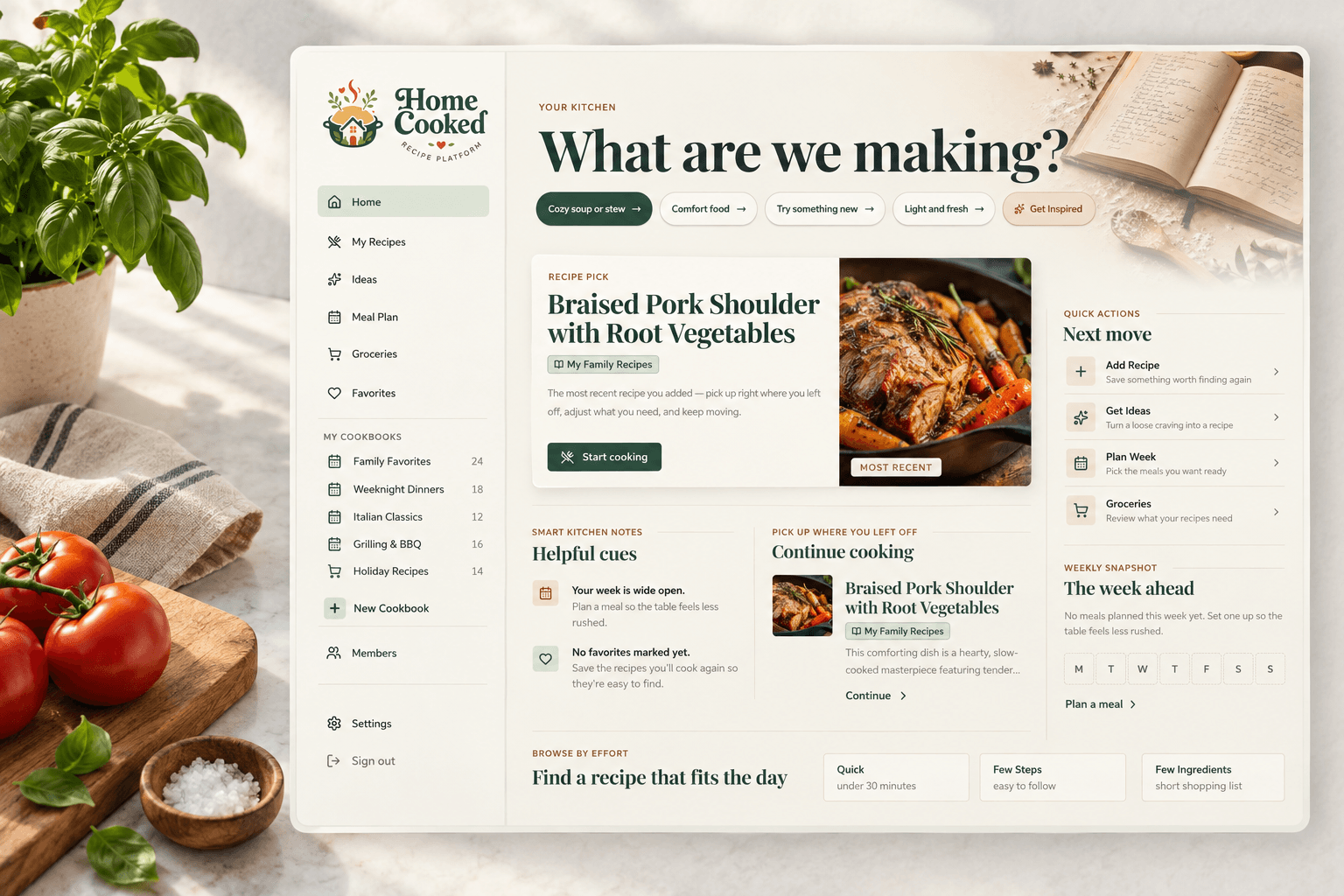
Then make the collection approachable. Home Cooked can hold readable recipes, notes, source information, and original attachments inside organized cookbooks. Family members can browse the usable version while the master archive remains protected and backed up elsewhere.
Usage is part of preservation. When someone cooks a recipe, they may identify a missing instruction, add a photo, or remember the person who made it. Build a way to return those discoveries to the record. A digitization project succeeds when it produces not only safer files, but a collection people understand well enough to keep alive.
A simpler way to keep everything together
Give the recipes you love a real home
Home Cooked lets you collect recipes into cookbooks, add the notes that make them yours, and share individual recipes or a whole cookbook when the plan and your family’s needs make that a good fit.
Create your cookbook