The card is part of the recipe
An old recipe card carries more than instructions. Its handwriting may identify the cook before a name does. The softened corners show how often it was handled, and a note squeezed into the margin may record the change that made the recipe work. Even a stain can help a family recognize the card they remember seeing on the counter.
Turning those cards into a digital cookbook shouldn't mean choosing between the object and a clean transcription. Preserve both. The image keeps the evidence and personality of the original; the typed recipe gives a new cook something searchable and readable enough to use.
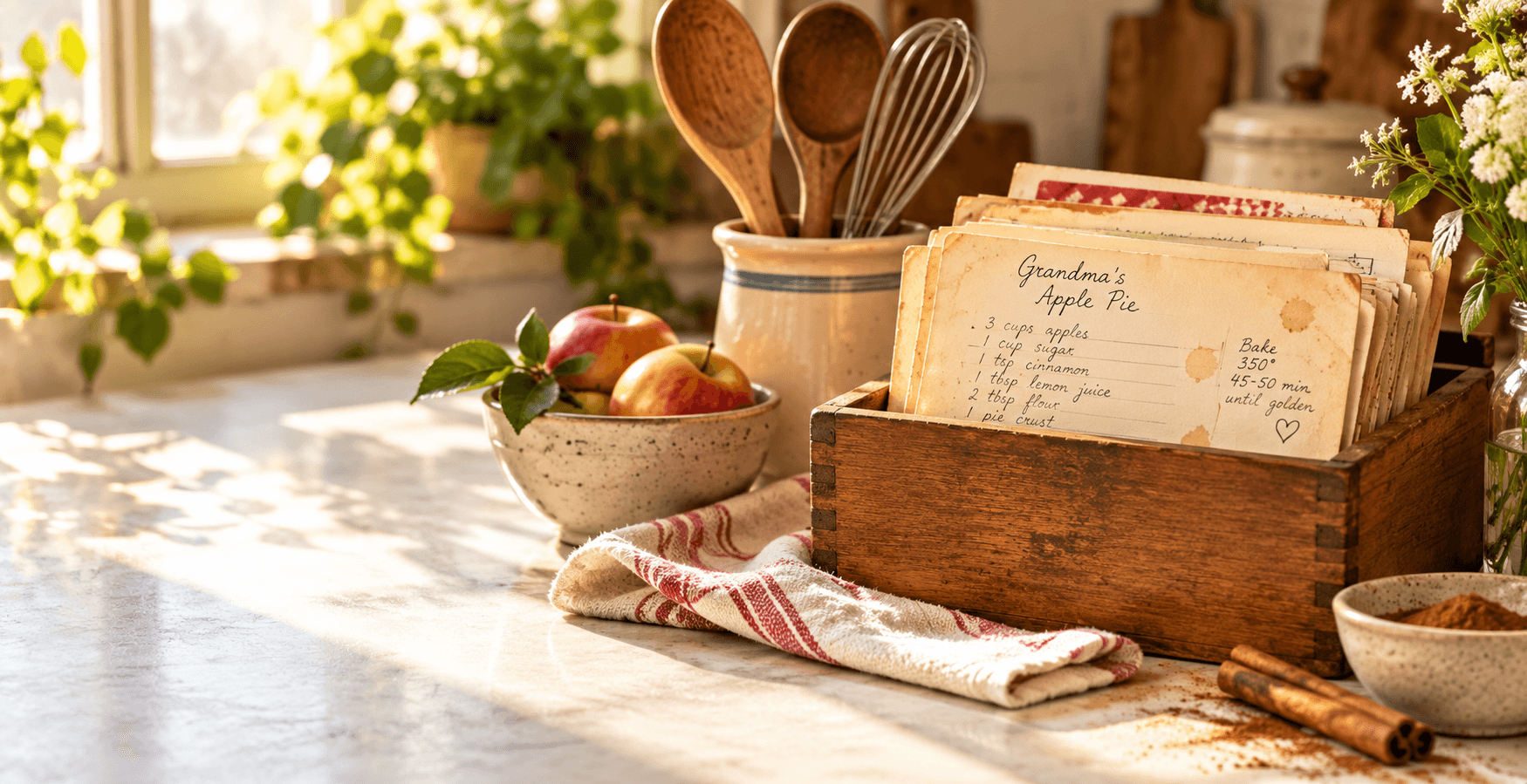
The image preserves the card. The transcription helps the recipe keep cooking.
Begin with a gentle sorting pass
Clear a dry table and sort the cards into manageable groups. You might group them by person, meal, approximate age, or physical condition. Set aside torn cards, faint pencil, and loose multi-page recipes for extra attention. The purpose is to create a workable order, not decide which recipes deserve to survive.
Notice duplicates and related pieces without discarding anything. Two nearly identical cards may reveal a substitution or a later revision. An unlabeled scrap may match the handwriting and ingredients on another card. Keep uncertain pieces together until you have enough context to identify them.
Give each card a simple reference number in a separate tracking note. That number can connect the physical card, image files, transcription, and family comments without writing on the original. A basic record now prevents confusion when dozens of similar files begin to accumulate.
Photograph every side and every clue
Use bright, indirect light and place the card on a plain surface. Hold the camera parallel to avoid stretched corners, fill the frame without cutting off edges, and check the image at full size before moving on. A phone camera is often enough when the light is even and the focus is sharp.
Capture the back even when it appears blank. Faint pencil, an old price, or a second set of directions can be easy to miss. Photograph envelopes, clipped notes, and inserts that belong with the recipe. If the writing is very light, take a second closer image rather than editing the only copy beyond recognition.
Keep the untouched image and make a separate adjusted copy if contrast or cropping improves readability. Use filenames that another person can understand, such as reference number, recipe name, and contributor. Camera roll numbers alone won't help when someone is looking for the original biscuit card years later.
Transcribe what the cook actually wrote
Start with a faithful transcription before making the recipe modern or complete. Preserve unusual spellings, abbreviations, and phrases such as a slow oven or butter the size of an egg. Mark words you can't read rather than quietly replacing them with what seems likely.
Then create a practical working version. Expand familiar abbreviations, arrange ingredients in the order they are used, and break a dense paragraph into clear directions. Put every addition in an editor's note or tested note. The reader should always be able to tell the difference between the card and later guidance.
Missing instructions require patience. Look for another family copy, ask someone who remembers the dish, or test the recipe in a small batch. An unexplained oven temperature should remain an open question until there is evidence. A digital cookbook gains trust by being honest about what is known.
Keep the shorthand, quirks, and person nearby
Some phrases are worth preserving even after they have been clarified. Mix until it looks right may frustrate a beginner, but it also reveals how the original cook worked. Keep the phrase, then add what you observed: glossy and thick enough to fall slowly from the spoon, for example.
Record who wrote the card, who used it, and how it entered the family. If the recipe was copied from a newspaper, community cookbook, or food package, include that source when known. Attribution gives the card an honest history and can help explain language or measurements that belong to another era.
Ask relatives to look at the images. Handwriting can trigger recognition, and someone may remember that the crossed-out sugar amount was a permanent family adjustment. Those responses belong with the recipe because they turn an isolated object into part of a larger story.
Give the cards a cookbook people can browse
A folder of scans is valuable, but it isn't yet an easy cookbook. Give each recipe a searchable title, connect it to its original image, and organize the working versions into a few clear sections. The structure might follow meals, contributors, branches of a family, or the order of the original box.
Keep backups of the original images outside the cookbook, and share copies with another trusted person. The digital book should make discovery easier without becoming the only place the source files exist. Good preservation uses more than one copy and more than one person who knows where to look.
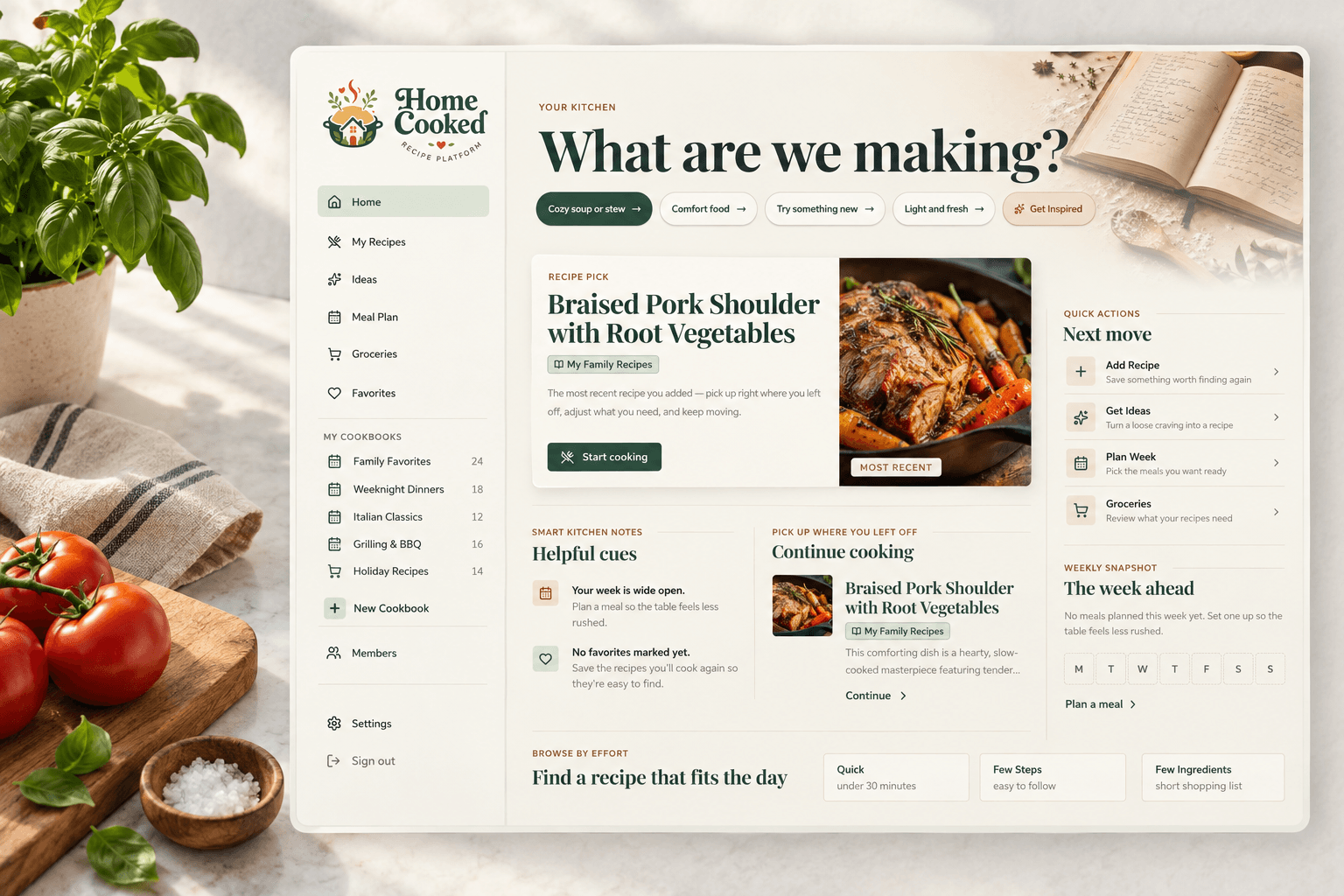
Home Cooked can hold the readable recipe, source details, private attachments, and family notes together inside a cookbook. That pairing lets someone admire the handwriting and still make the casserole without guessing. The card remains an object worth caring for, while the recipe returns to use.
A simpler way to keep everything together
Give the recipes you love a real home
Home Cooked lets you collect recipes into cookbooks, add the notes that make them yours, and share individual recipes or a whole cookbook when the plan and your family’s needs make that a good fit.
Create your cookbook