The family collection is already divided among people
One relative has the handwritten pie recipe. Someone else knows the casserole everyone remembers from Thanksgiving, but has never written it down. A cousin saved a phone photo of the rolls, and three people are certain their version of the sauce is the original. Sharing family recipes often begins by admitting that no single person has the whole collection.
That isn't a problem to solve by choosing one keeper of the truth. It's an invitation to build a clearer shared record. The aim is to gather what exists, preserve who contributed it, and give relatives a version they can actually find and use.
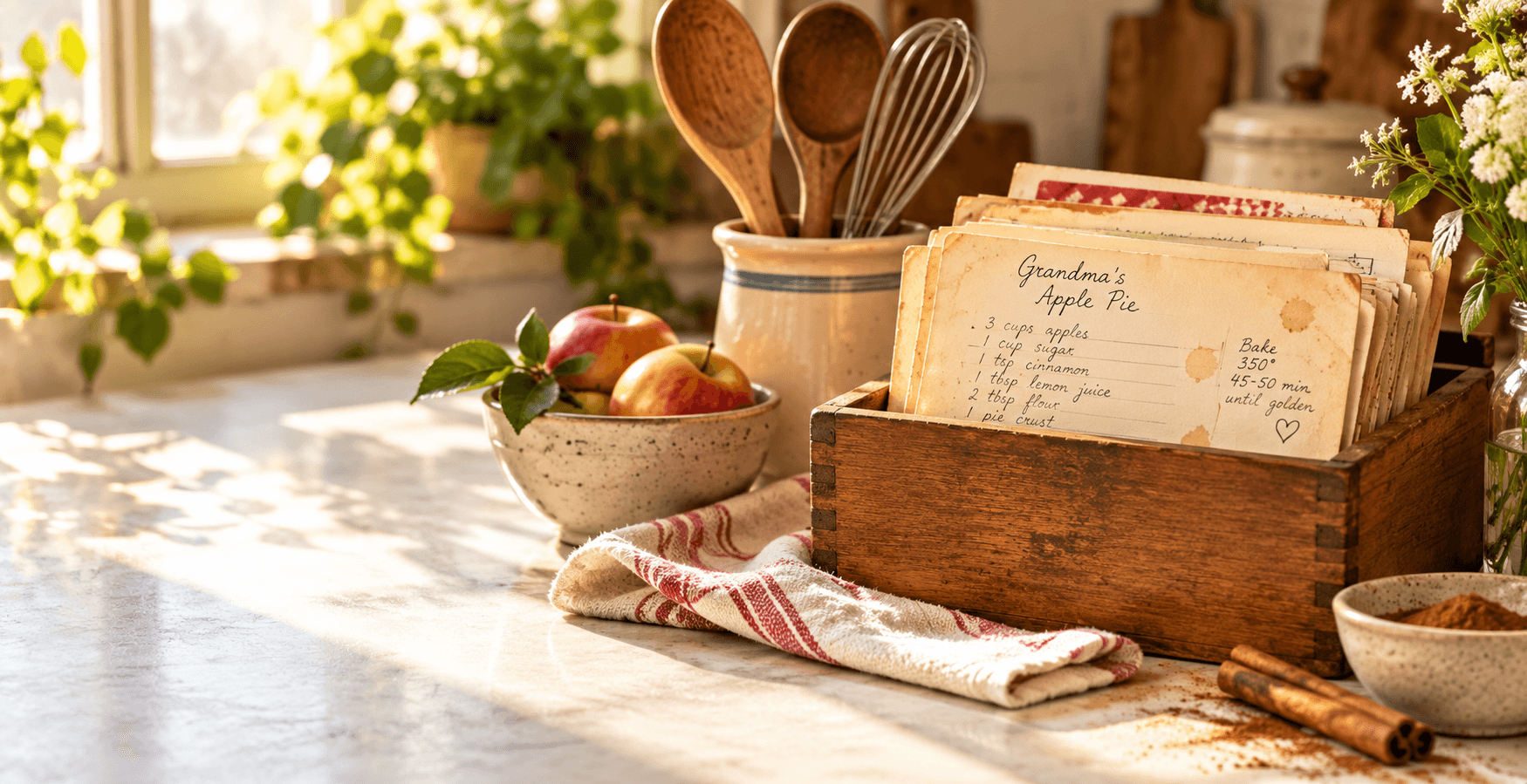
A shared recipe carries farther when its source and story travel with it.
Ask for one recipe and one memory
A broad request for all the family recipes can feel like homework. A specific invitation is easier: send the chicken dish you make for birthdays, or photograph the cookie card in your mother's handwriting. Give people a simple way to respond by text, email, photo, voice note, or link.
Ask for one small piece of context with the recipe. Who made it? When did it usually appear? Is there a change the contributor always makes? These questions produce details that a bare ingredient list can't recover later, and they help relatives feel that their knowledge matters as much as the file itself.
Set a reasonable first boundary. A holiday collection or a book of one person's recipes can be easier to complete than an attempt to gather everything at once. Early results also make it easier for other relatives to understand the project and join in.
Let different versions explain themselves
When two relatives send the same recipe, compare before merging. One version may have the original wording while another contains the changes everyone now expects. Dates, handwriting, source notes, and ingredient differences can help establish how the recipe traveled.
Choose a clear working version when the family needs one, but keep meaningful alternatives connected to it. Label a variation by person or place instead of calling another relative wrong. Aunt Rosa's Sunday version and the smaller weeknight batch can coexist when the distinction helps a cook choose.
If nobody knows which version came first, say that. Family memory is allowed to be incomplete. A short note about the disagreement is more honest than inventing a definitive history, and it may prompt someone else to recognize the missing piece.
Give the recipes enough order to be welcoming
A folder full of attachments may technically be shared, but it places all the work on the recipient. Before inviting the family in, give recipes recognizable titles, readable ingredients, and a few broad sections. Keep source names and original images attached so the cleanup doesn't erase where anything came from.
Think about the difference between sharing one recipe and sharing a collection. A link to a single soup is useful when someone asks what to make tonight. A cookbook is better when the recipes belong together, such as holiday baking, meals from a grandparent, or the dependable food of one household.
Add enough context for someone outside the original kitchen. The right pan, a realistic yield, and a cue for doneness can matter more than polished prose. Shared recipes succeed when relatives don't need a private translation to cook them.
Keep the door open after the first share
The first version will cause people to remember more. Someone will notice a missing salad, recognize a card, or finally explain what a vague instruction meant. Make it easy to send those additions, and keep a small record of what changed so contributors know their corrections were heard.
Home Cooked supports individual recipe sharing and cookbook invitations on both plans: up to 3 Family members on Free, or unlimited people and Contributor access with Plus. That makes it possible to answer a quick request without exposing an entire collection, or to give relatives a common home where recipes, memories, and notes can grow together.
The best shared collection doesn't prove who remembered everything correctly. It gives the family a dependable place to bring what each person knows. Over time, that place becomes more useful because the recipes are cooked, questioned, and improved together.
A simpler way to keep everything together
Give the recipes you love a real home
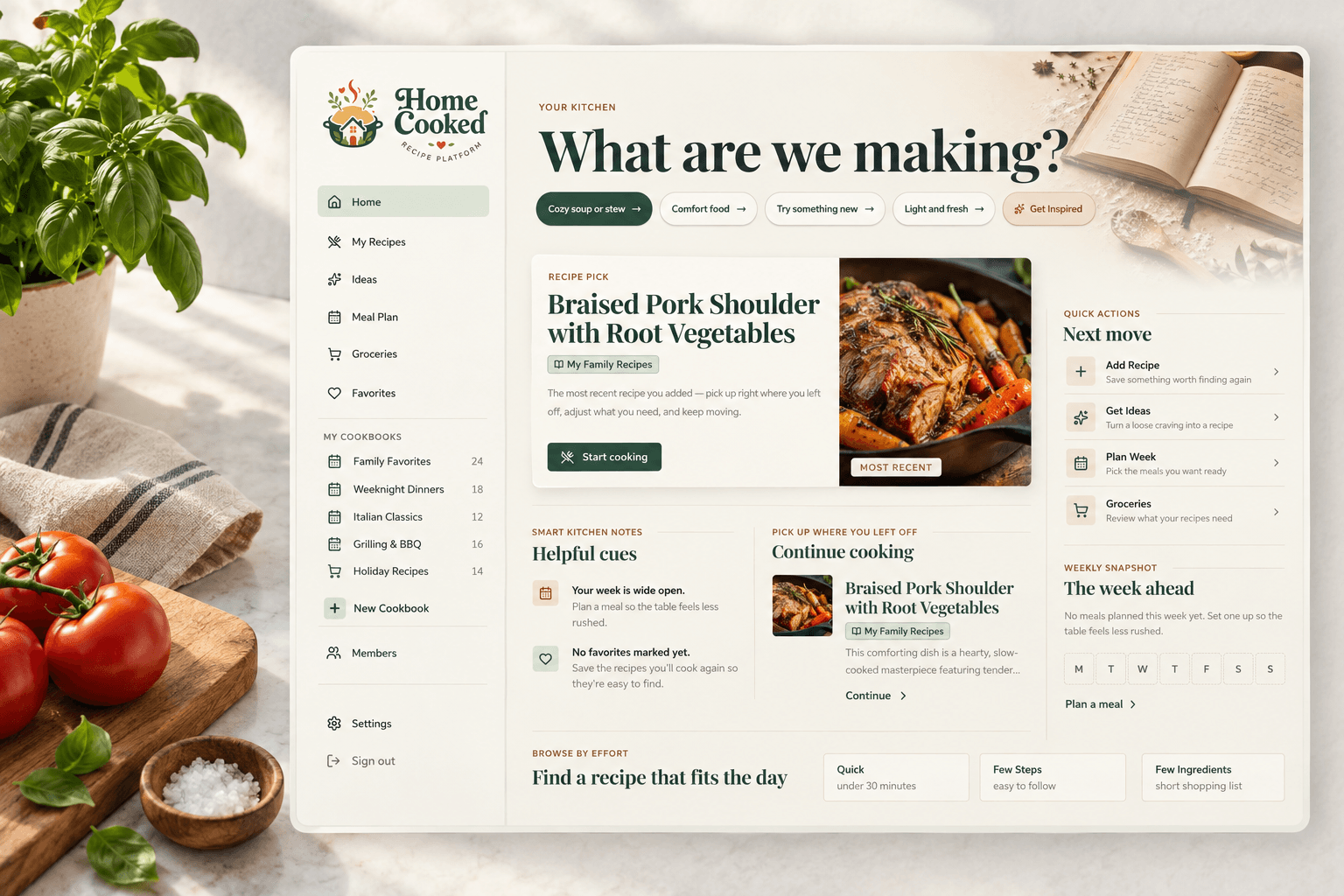
Home Cooked lets you collect recipes into cookbooks, add the notes that make them yours, and share individual recipes or a whole cookbook when the plan and your family’s needs make that a good fit.
Create your cookbook