Saved doesn't always mean findable
It's easy to save a recipe online. It takes one tap to bookmark a page, capture a screenshot, pin an image, or send a link to yourself. The trouble appears later, usually around dinner, when you remember the promising noodle dish but not whether it lives in a browser folder, a message, or the camera roll between vacation photos.
An online recipe collection becomes useful when saving is followed by a small editorial decision. Why did this recipe matter? Where would you look for it? Have you cooked it, or is it still an idea? Answering those questions turns a pile of possibilities into something you can return to.
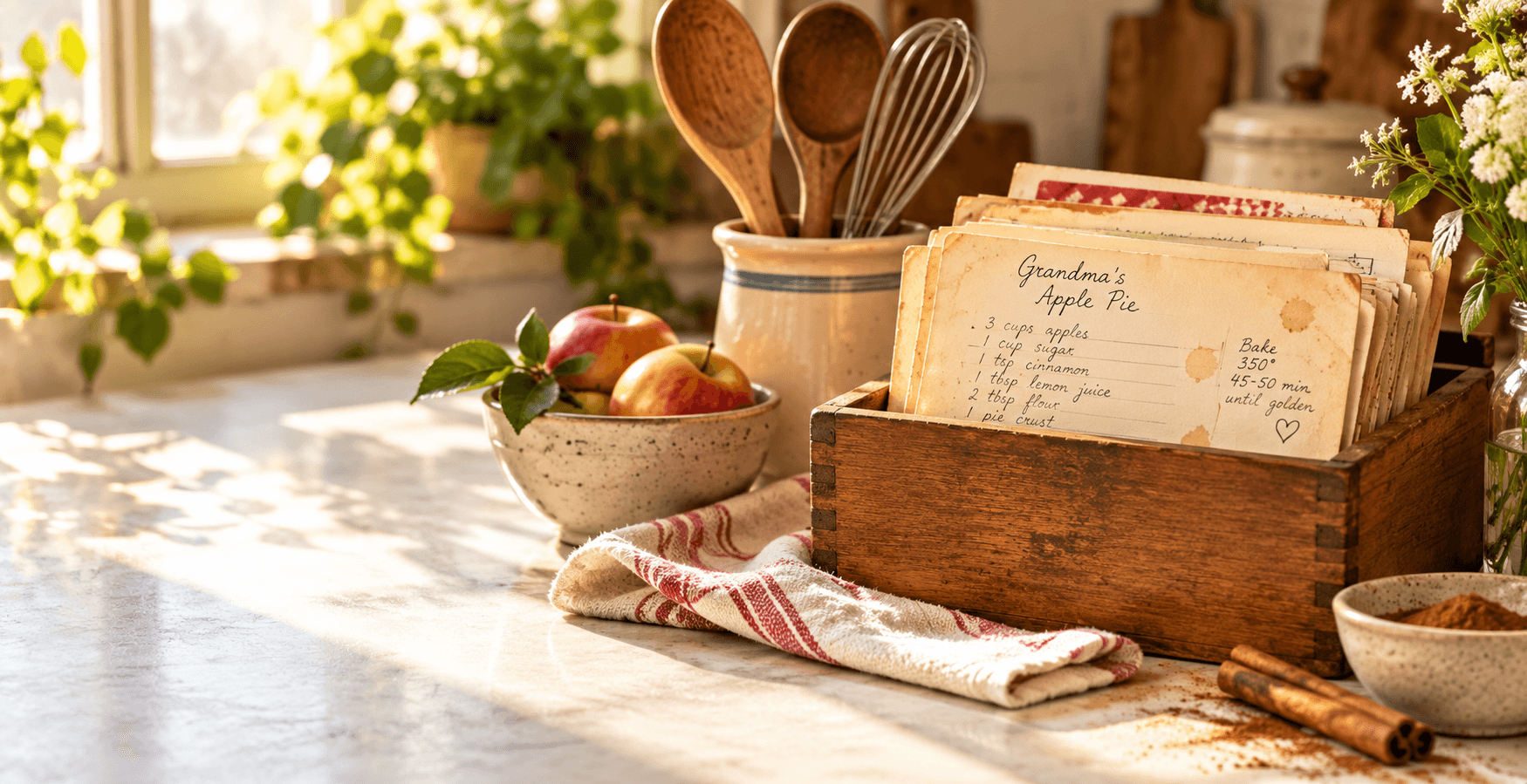
A useful online collection remembers why a recipe mattered, not only where it was found.
Gather the digital breadcrumbs in one place
Begin with a temporary inbox. Move bookmarks, screenshots, PDFs, notes, saved posts, and links from text messages into one review list. Don't build categories while you gather; switching between collecting and filing makes both jobs slower.
Keep enough information to identify the source. A screenshot of ingredients without the creator's name or method may be impossible to reconnect later. When you can, return to the original page and save the title, creator, and link. If the page is already gone, note what you know instead of treating the image as complete.
Include open tabs and messages that have become unofficial storage. The aim isn't to preserve every passing interest. It's to see the true size of the collection so you can decide which recipes deserve a dependable home.
- Browser bookmarks and open tabs
- Screenshots, saved posts, and Pinterest boards
- PDFs, newsletters, notes, and email links
- Recipes sent through texts and group chats
Keep a reason with every recipe
A useful filter is simple: have you made it, do you genuinely plan to make it, or can you explain why it belongs? A recipe saved because it looked good for three seconds doesn't need the same status as the soup you've cooked four times. Let some links go without turning the review into a moral judgment about waste.
Separate tested recipes from ideas. The tested ones can enter a cookbook with your notes and adjustments. The possibilities can wait in a smaller to-try list. This distinction prevents an inspiring backlog from crowding out the food you already trust.
Notice duplicates by looking past slightly different titles. Five versions of crispy potatoes may represent one ongoing search. Keep the most promising source or the version that worked, then record what you liked rather than saving every near match forever.
Treat the source as part of the recipe
Online recipes belong to the people who created and published them. Keep the creator's name and original link with your private notes, and return to the source when you cook. Don't remove attribution or republish protected work as though it were your own.
Source details are practical as well as respectful. The original page may contain technique photos, a video, substitutions, comments, or corrections that don't fit in a saved screenshot. A good record lets you find that context again.
If you adapt a recipe for your household, label the changes clearly. Your notes about less sugar, a different pan, or a shorter baking time can be valuable without obscuring the creator whose work gave you the starting point.
Organize for the moment you'll need it
Group recipes by the decisions you actually make. Weeknight Dinners, Weekend Projects, Baking, Packed Lunches, and Holiday Ideas may be more useful than a strict taxonomy of cuisines and techniques. A collection should support cooking, not demonstrate how finely you can classify it.
Use clear titles and a consistent naming pattern. If the original headline is long or vague, keep the source title in the record and add a practical name you'll recognize. The phrase that helps you search may be the ingredient, the occasion, or the person who first sent the link.
Home Cooked can import recipes from supported websites and files for private use, then organize them alongside recipes you write yourself. Review every import for accuracy and preserve its source. Importing saves typing; it doesn't replace the judgment that turns a saved page into part of your cookbook.
Use a small maintenance rhythm
Online collections become chaotic because saving is instant and reviewing is postponed. Give the inbox ten minutes after you cook. Add the recipe if it worked, include the note you'll need next time, and delete the screenshots or extra tabs that no longer serve a purpose.
Once in a while, scan for broken links, duplicate ideas, and recipes that have waited untouched for a year. Keep a source copy or your own lawful notes where appropriate, but accept that not every inspiration needs permanent storage.
The goal isn't a perfectly empty inbox. It's a collection where the good recipes are easier to find than the forgotten ones. When the structure reflects your real cooking, saving becomes the beginning of a decision instead of the end of one.
A simpler way to keep everything together
Give the recipes you love a real home
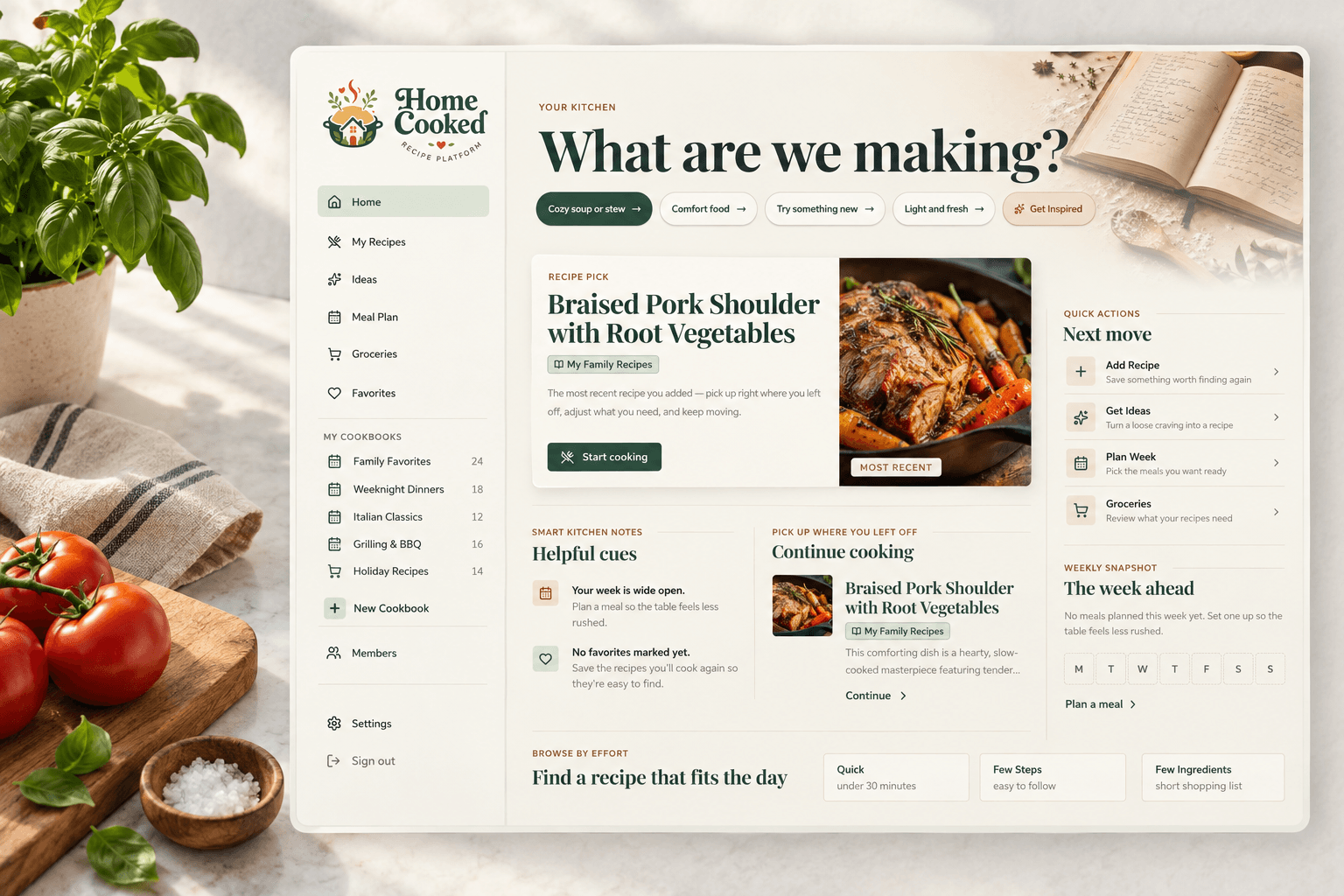
Home Cooked lets you collect recipes into cookbooks, add the notes that make them yours, and share individual recipes or a whole cookbook when the plan and your family’s needs make that a good fit.
Create your cookbook