Family recipes usually disappear quietly
A recipe doesn't have to be thrown away to be lost. It can remain in a box nobody opens, on a phone that no longer turns on, or in the memory of the only person who knows that a written teaspoon really means a heaping spoon from the silverware drawer. The paper may survive while the knowledge around it fades.
Preservation begins by recognizing those fragile places. The goal isn't simply to make a scan of every card. It's to protect the original, record what people know, and create a version that another cook can understand. A recipe stays alive when it can still take part in an ordinary meal.
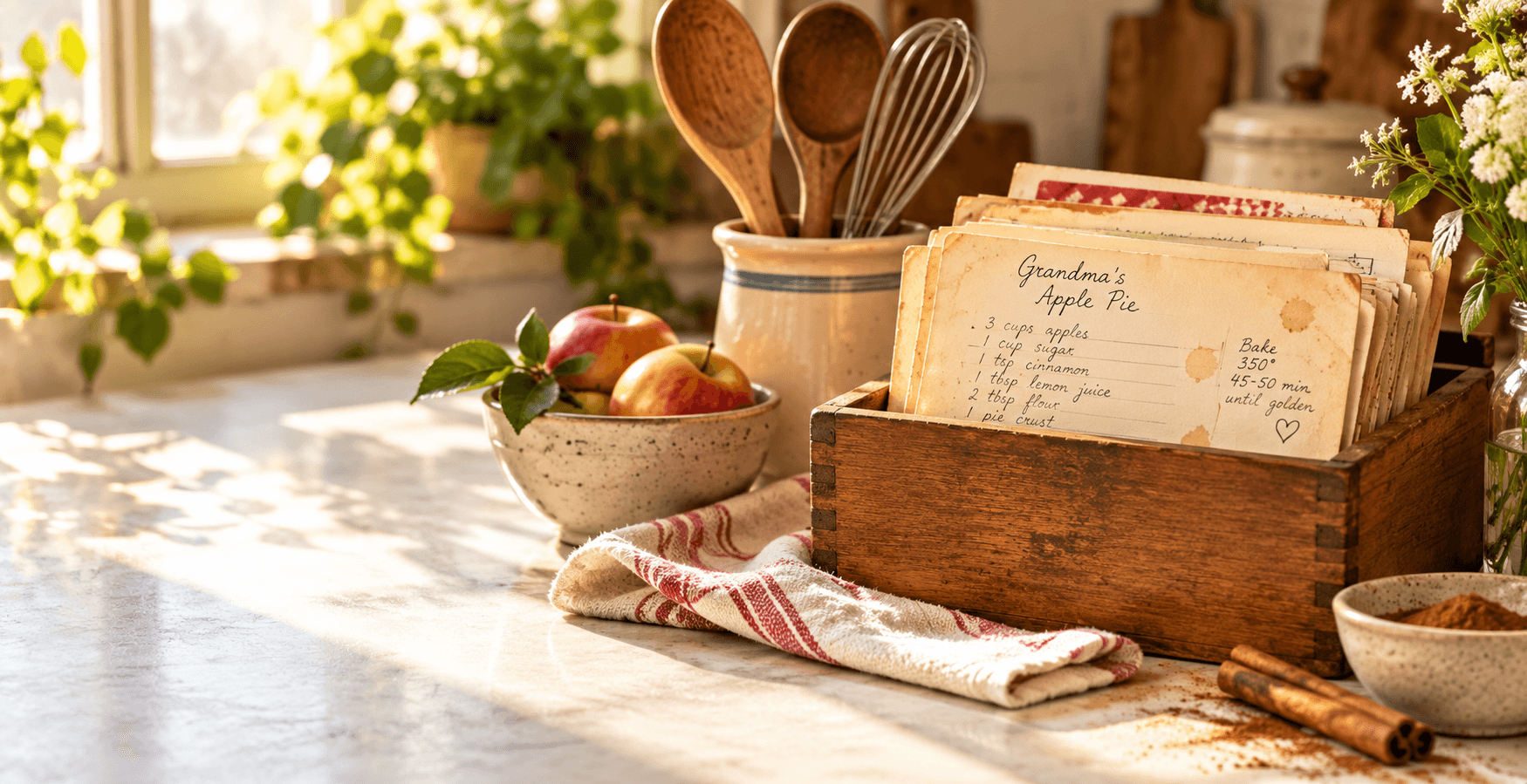
Preservation works best when the recipe can still be cooked, questioned, and shared.
Notice which recipes are carrying the most risk
Start with the recipes that depend on one person, one object, or one aging piece of technology. A holiday bread made entirely by feel may be more urgent than a clearly written cookie recipe with several copies. A notebook with loose pages deserves attention before a modern file that already lives in a shared folder.
Make a simple inventory with the recipe name, its current location, the person connected to it, and what still needs to be learned. This isn't a cataloging project for its own sake. It's a way to see that the soup is written down but the dumplings aren't, or that the cake card exists but nobody knows which frosting was always used.
Ask family members what they would be sad not to know how to make. Their answers may be surprisingly ordinary: a salad dressing, Sunday eggs, or the way rice was seasoned. Preservation shouldn't be limited to impressive recipes. Weeknight routines often carry the clearest memory of how a household actually ate.
Ask while the small answers are still available
A conversation can preserve what a camera can't. Sit with the person who knows the recipe and ask them to talk through it as if you were making it tomorrow. Where did it come from? What does the dough look like when it's ready? Which ingredient do they always change? The useful details tend to appear while discussing the act of cooking.
Open questions invite stories, but practical questions make the recipe usable. Ask about pan size, heat level, timing, substitutions, and the visual cues that replace a timer. If the cook measures by hand, note what that handful looks like. If two relatives remember the recipe differently, record both accounts instead of forcing a false certainty.
Keep attribution close to the recipe. Include the name of the writer or cook, who taught them, and how the recipe changed if that is known. A future reader should be able to tell the difference between an original card, a family adaptation, and a recipe saved from a published source.
Protect the object as well as the information
Handle fragile cards with clean, dry hands on a clear surface. Avoid tape, glue, aggressive erasing, or attempts to flatten a brittle fold. Store paper away from direct sun, kitchen steam, and damp basements. An acid-free sleeve or box can protect an important card without changing it.
Photograph or scan the entire object, including the back, edges, stains, and notes in the margins. Use soft, even light and keep the camera parallel so the writing stays readable. Capture an overview first, then take closer images if the ink is faint. A filename that includes the recipe and person is much more useful than a folder full of anonymous camera numbers.
The marks on a card aren't clutter. A crossed-out measurement may show how the recipe evolved. A grease spot may reveal which side was held against the bowl. Preserve a clean digital image before making any adjustment for readability, and keep that original file unchanged.
Create a copy someone can cook from
Transcription turns an image into a searchable, practical recipe. Copy the wording faithfully first. Then create a working version with ingredients in a consistent order and directions broken into clear stages. Keep editorial additions separate from the original language so the reader can see what was written and what was learned later.
Don't invent missing knowledge. If the oven temperature is absent, mark it as unknown until someone can test the recipe. If the card says one box, retain the phrase and add the package size only when it has been confirmed. Honest uncertainty is safer and more useful than confidence that came from a guess.
A preserved recipe should include enough context to be found again. Add the person, occasion, source, and any familiar alternate name. Someone searching for Christmas potatoes may not remember that the card itself says Company Casserole.
Make sure more than one person can find it
Digital files aren't automatically permanent. Keep at least one backup in a different service or location, and check occasionally that the files still open. Use clear folders and names that another person can understand without you standing beside them. One password, one device, or one knowledgeable relative should never be the entire archive.
Share copies with the people who will value and use them. A relative may correct a name, identify handwriting, or contribute the missing second page. Shared access turns preservation into a family practice instead of leaving one person responsible for everything.
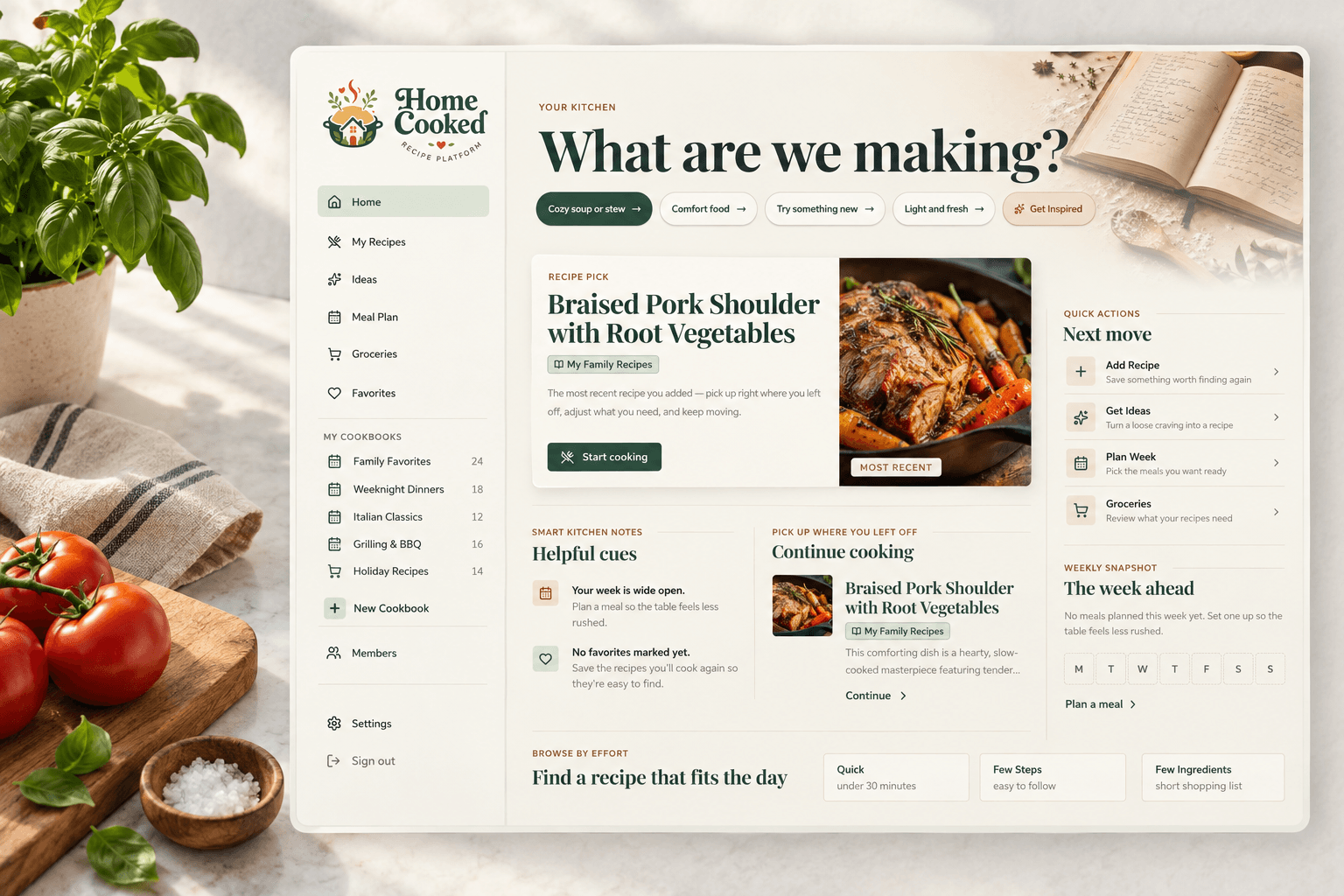
A tool such as Home Cooked can become the usable layer of the archive by placing typed recipes, notes, images, and source details inside organized cookbooks. Keep the original files backed up separately. The cookbook is where the preserved knowledge can return to the kitchen, collect tested notes, and remain part of family life.
A simpler way to keep everything together
Give the recipes you love a real home
Home Cooked lets you collect recipes into cookbooks, add the notes that make them yours, and share individual recipes or a whole cookbook when the plan and your family’s needs make that a good fit.
Create your cookbook